The Halo Service Automation Framework (SAF)
- SAF
- SDM
- TOM
Overview
How frequently do ITSM products get deployed, only to later question the minimal value gained from the platform in terms of genuine process automation and a clear understanding of ownership and accountability during unforeseen issues? Boasting an expensive ticketing system is not a source of pride, yet it's estimated that around 70% of clients find themselves in this exact situation.
The solution is surprisingly straightforward. Prioritise upfront efforts, coupled with sustained investment in defining and maintaining IT and business services, alongside their broader ecosystems in the CMDB. This includes establishing ownership and accountability for supporting and delivering these services, which is crucial. At Halo, we comprehend the significance of such an investment. We've streamlined the process to make it as effortless as possible, facilitating this crucial step and thereby optimising opportunities and investments in our Halo ITSM platform.
This KB describes a best practice methodology that has been employed for over 15 years to maximise investment in ITSM by ensuring the foundations are robust, scalable and flexible.
Strong Foundations
The below describes the core components of the SAF.
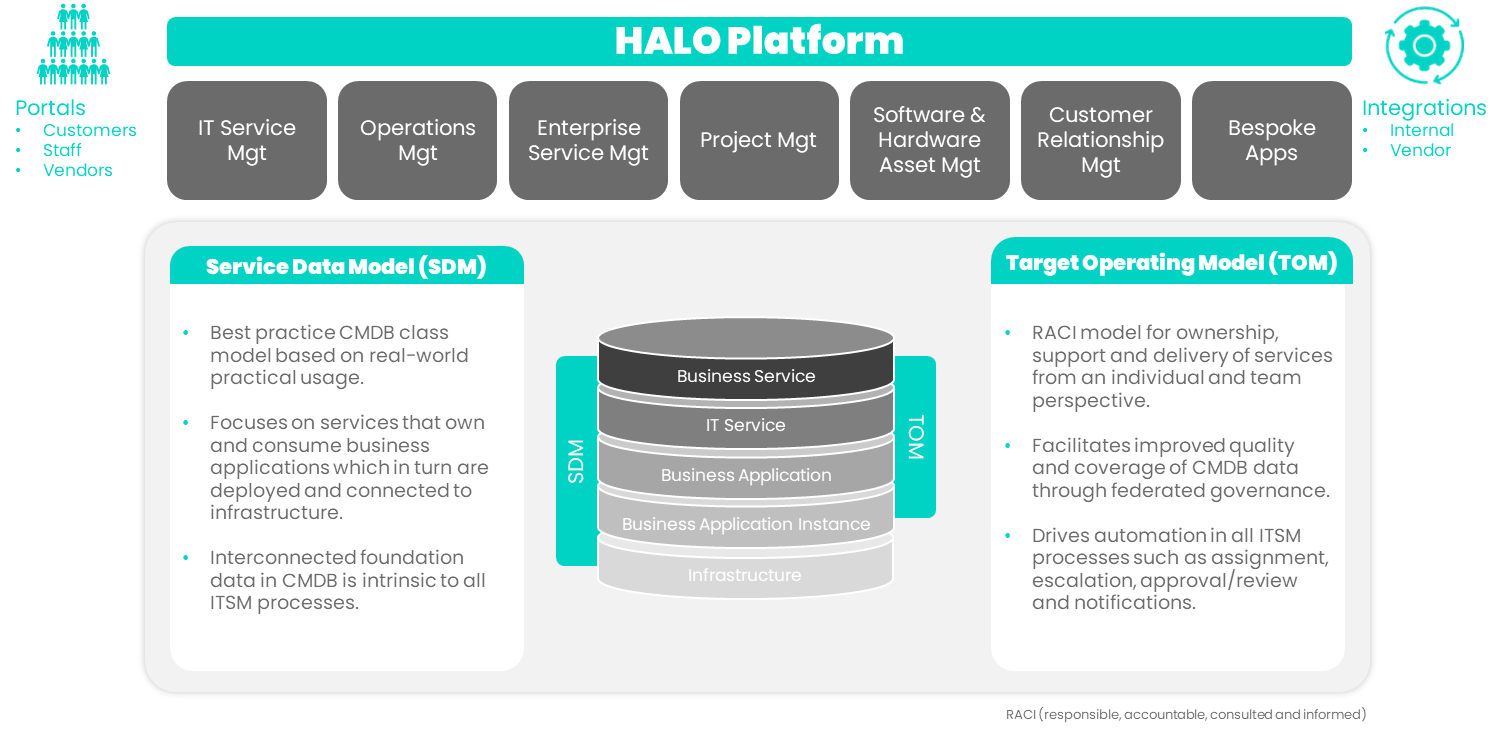
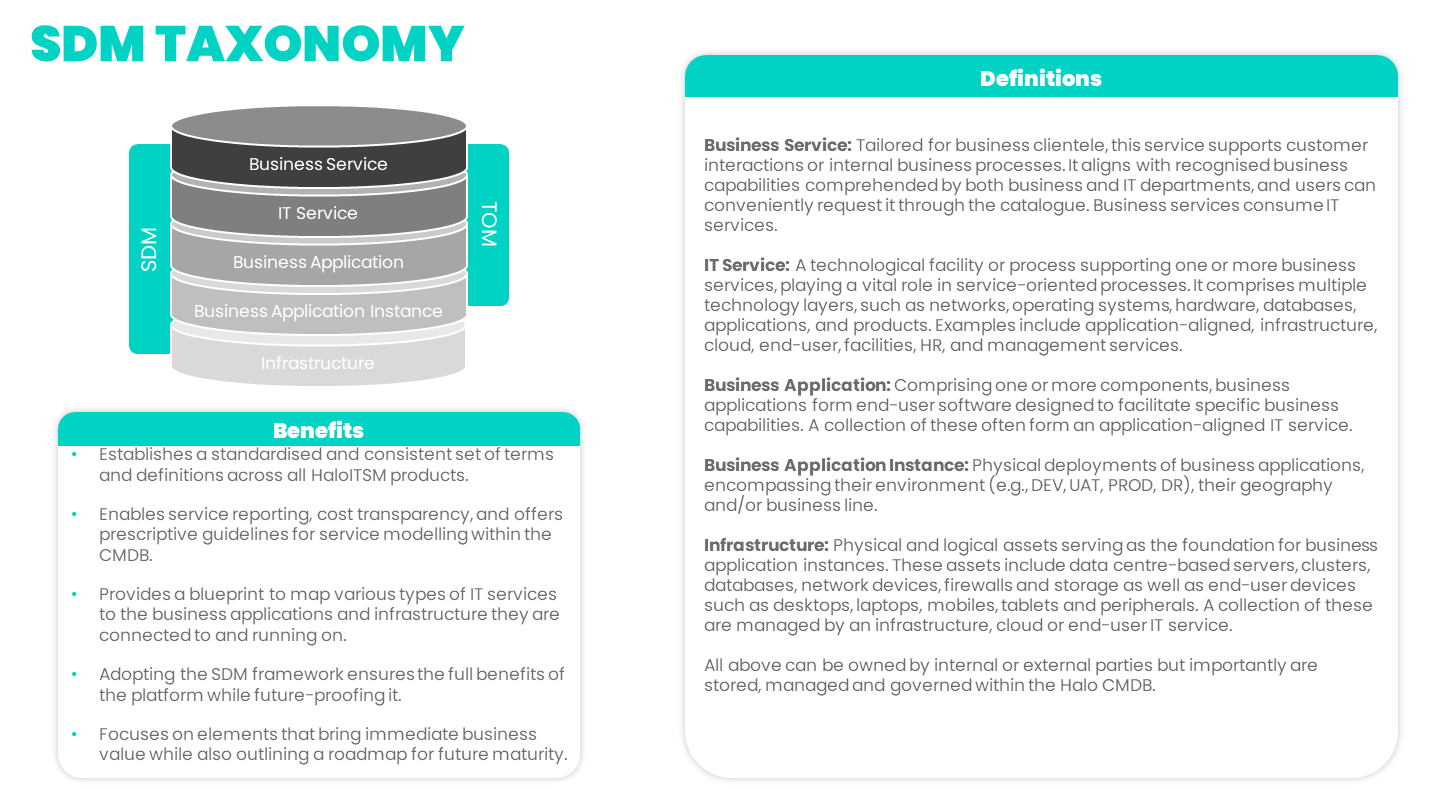
Service Data Model (SDM)
The SDM is a best practice CMDB class model comprising the following CI types and relationships.
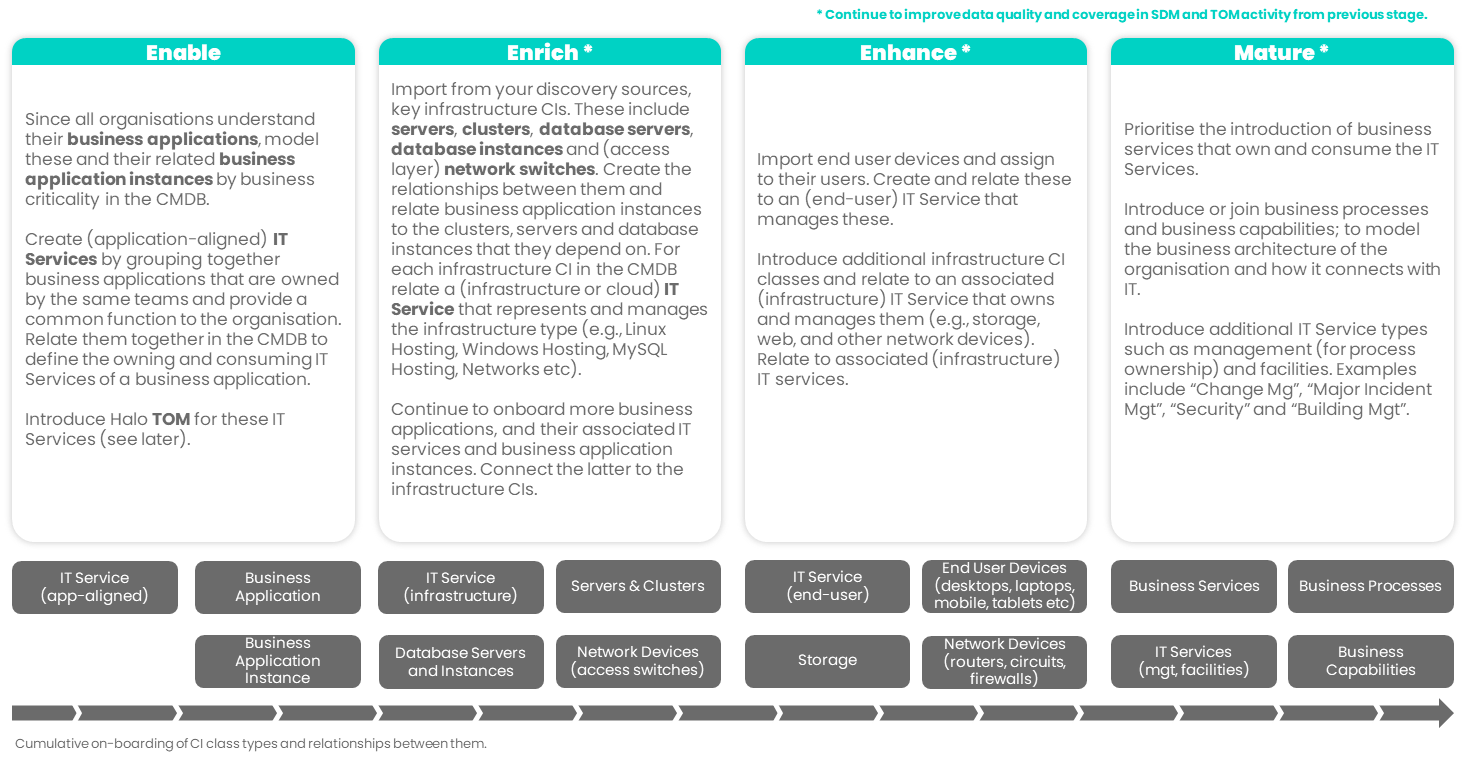
SDM Maturity Journey
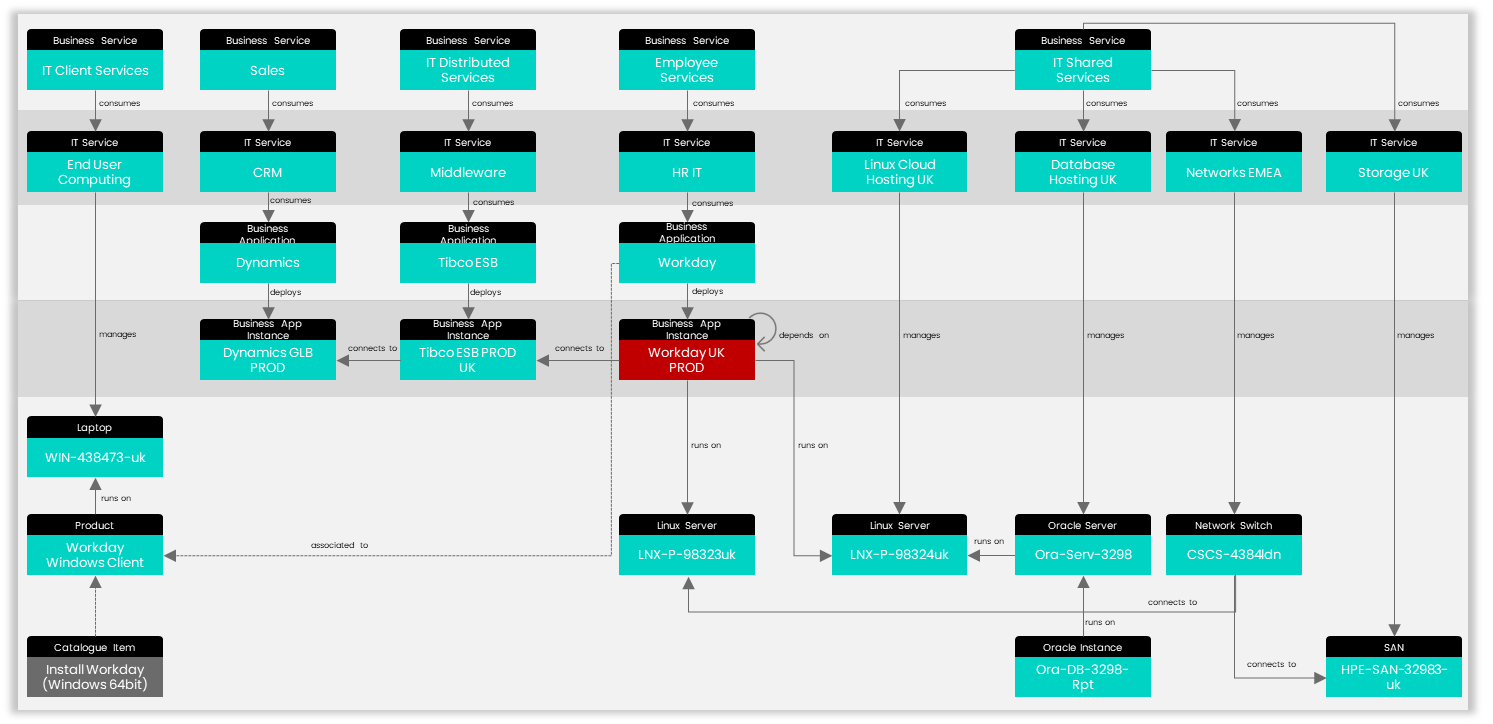
SDM Working Example
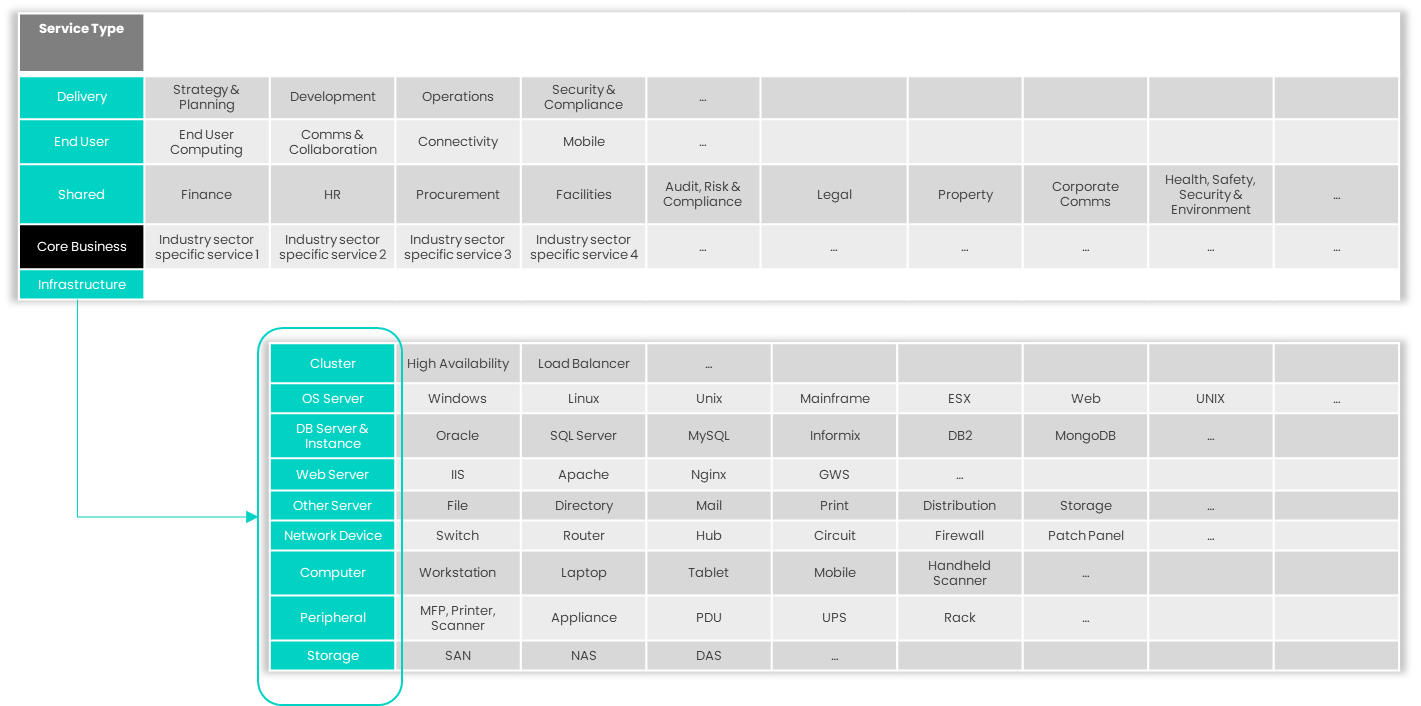
SDM Service Types
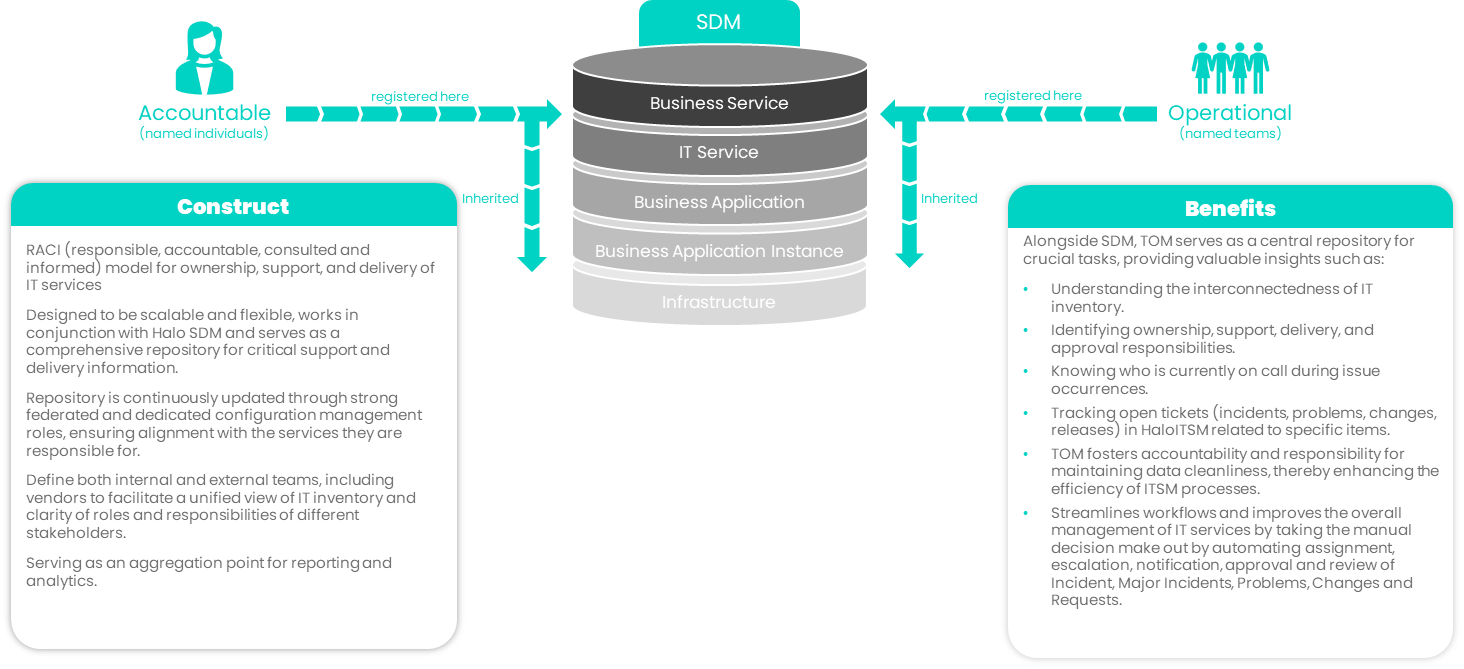
Target Operating Model
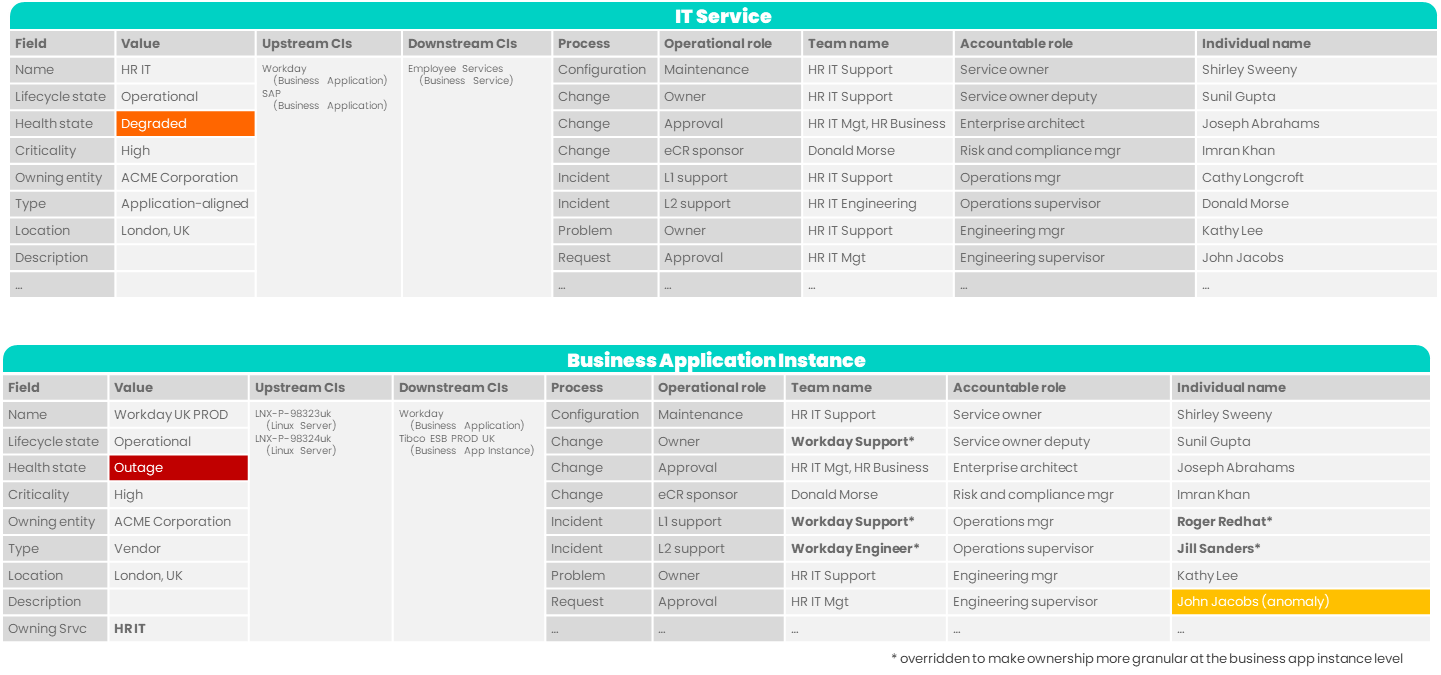
TOM working example - Workday
TOM working example – Linux hosting
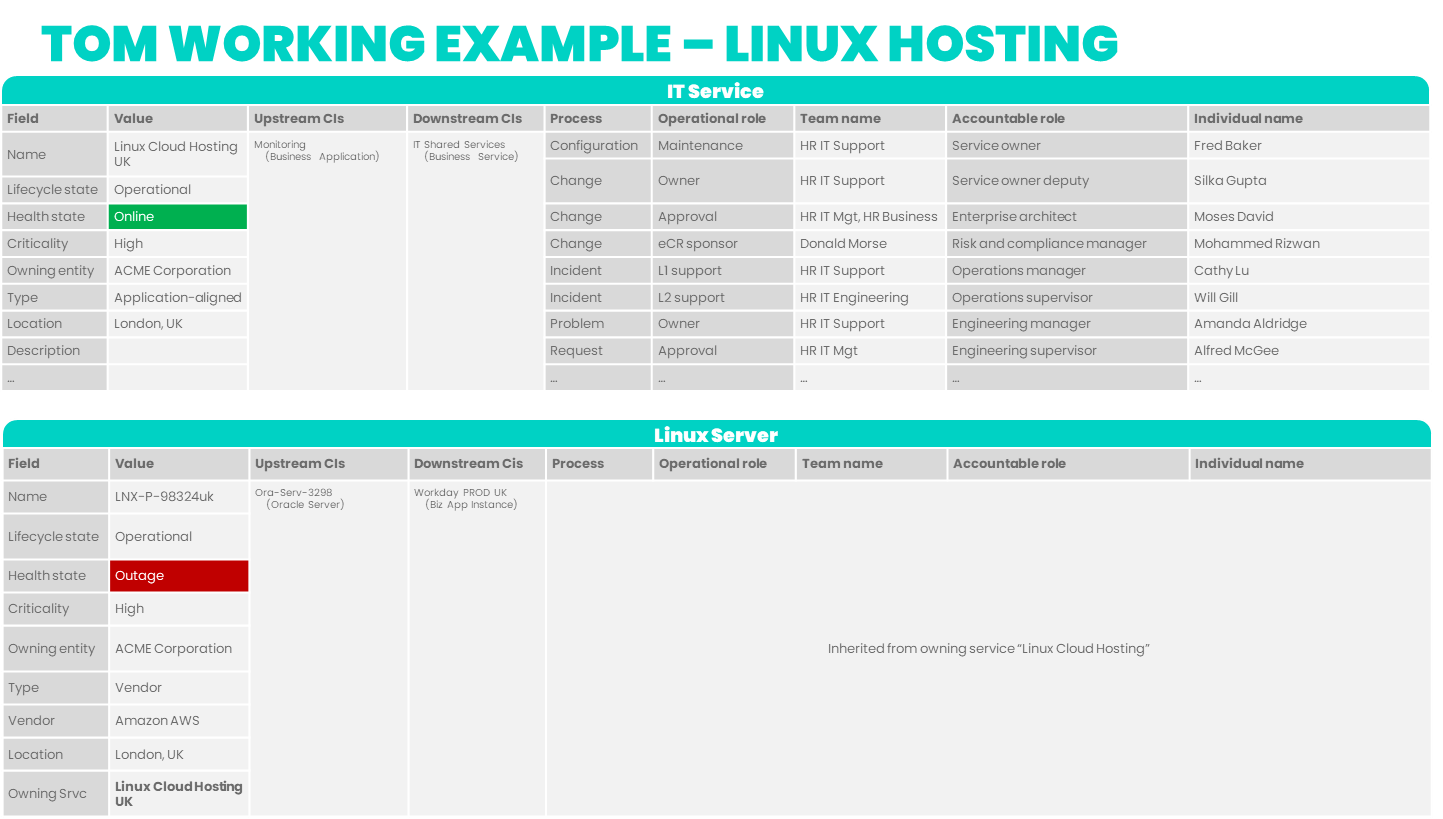
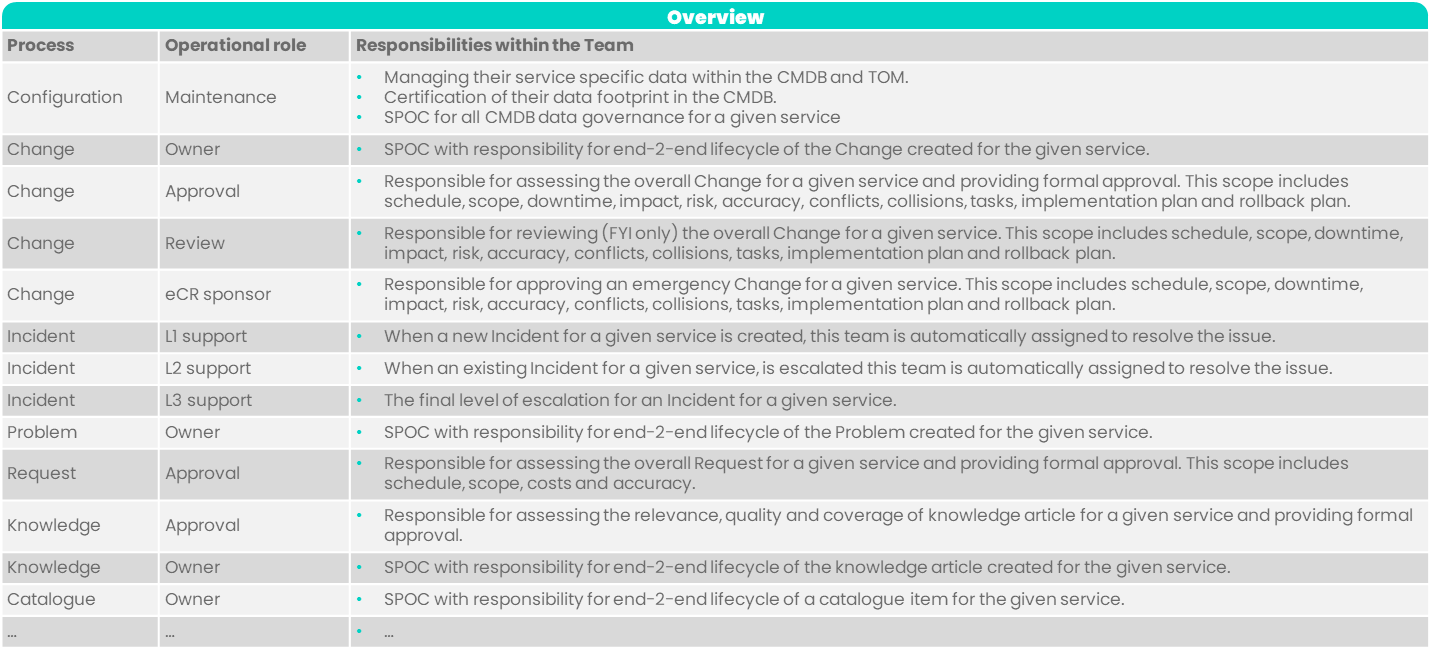
TOM Operational Roles
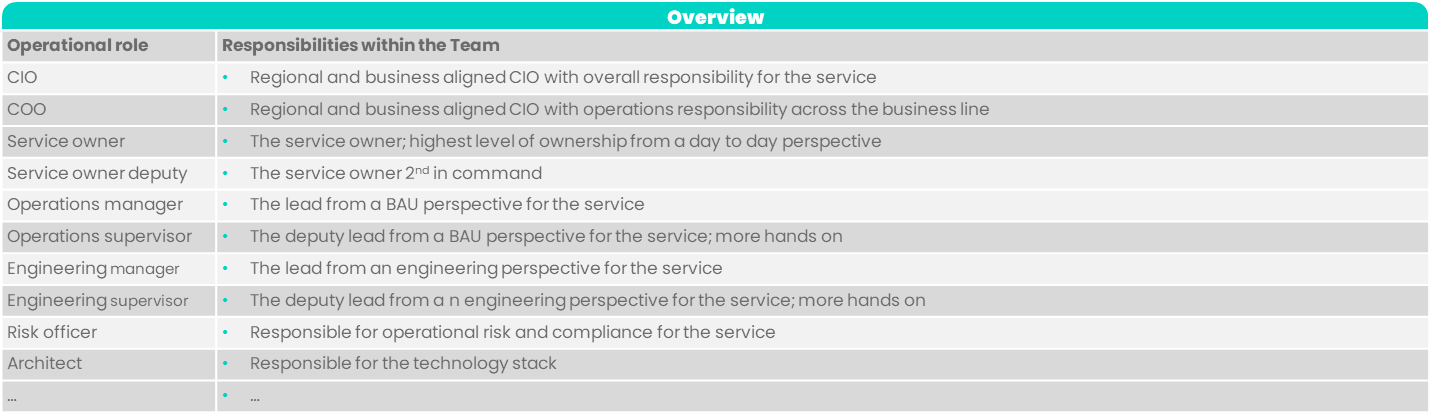
TOM accountable roles
Why the Service is so important and at the heart of everything
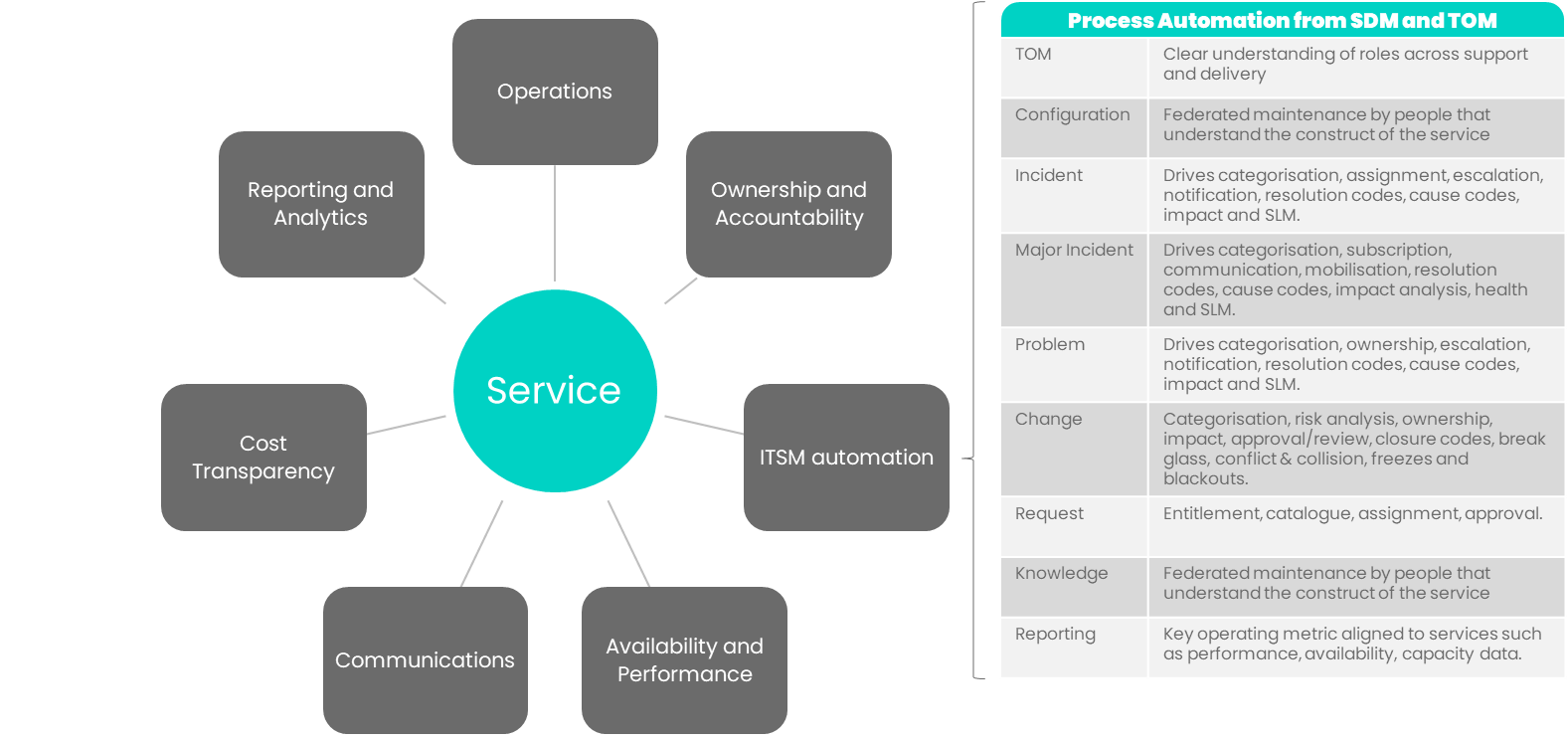
SAF approach
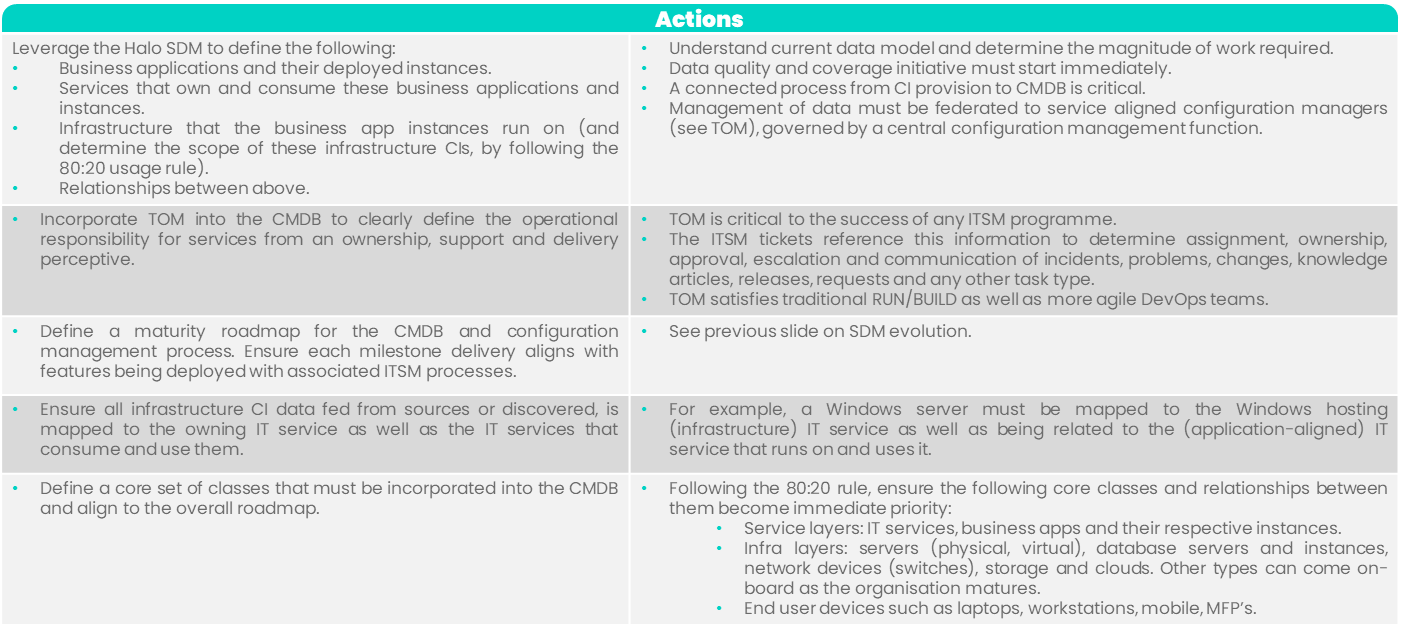
SAF Journey: Stage 1 - Infrastructure
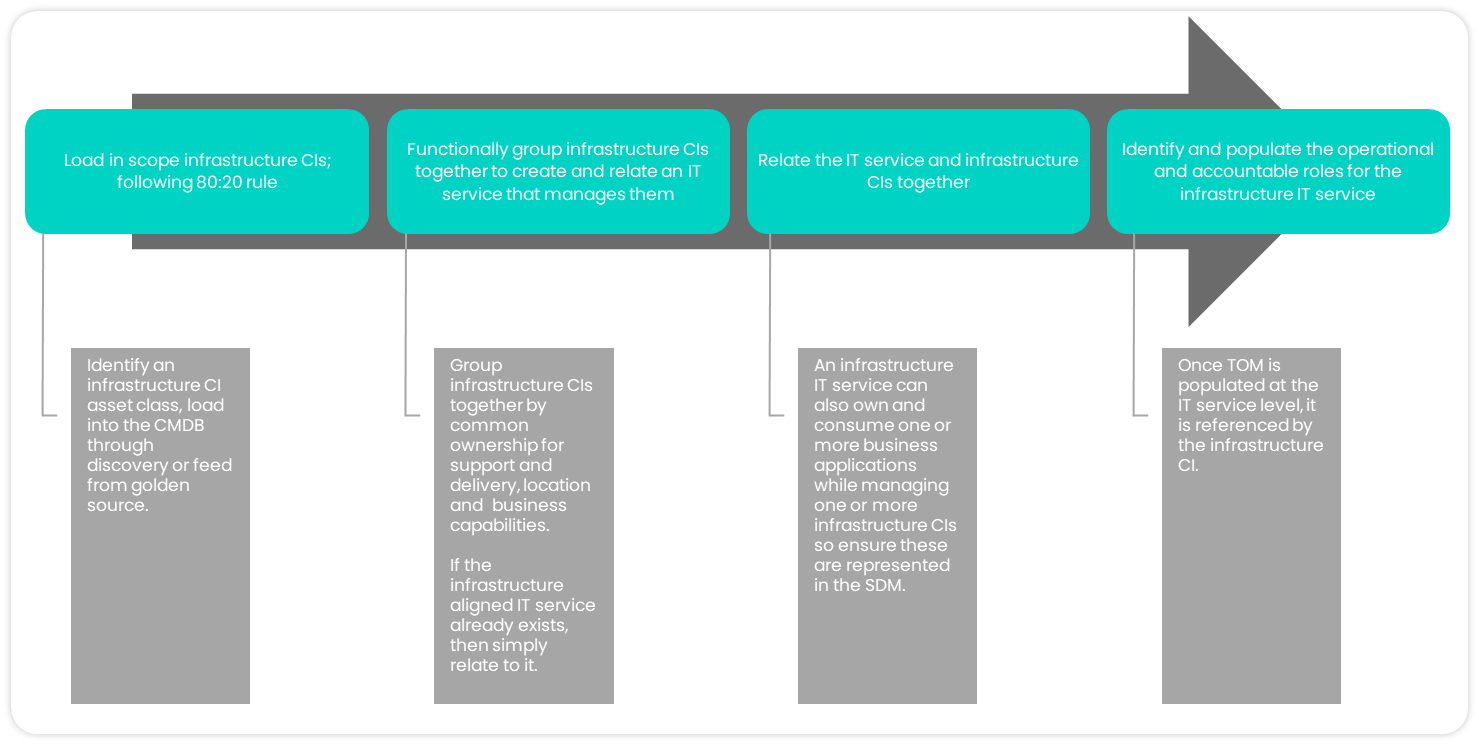
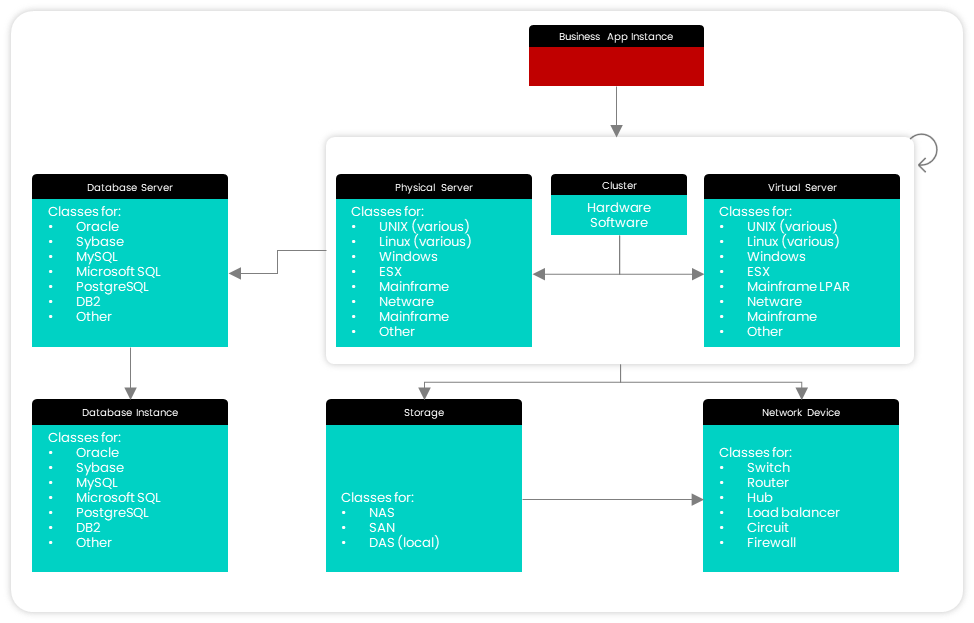
The typical list of infrastructure CIs include:
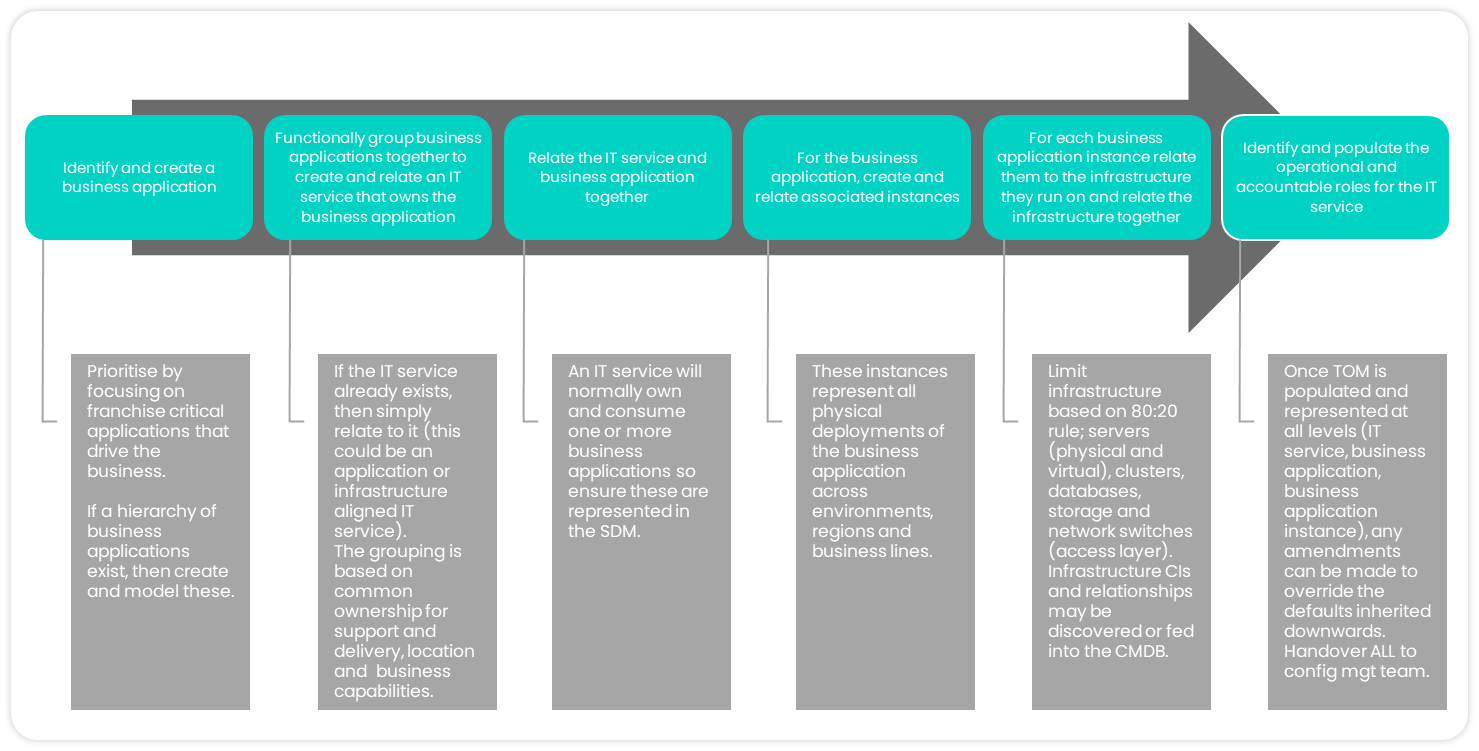
SAF Journey: Stage 2 - Applications
SAF Journey: Stage 3 - End User Devices
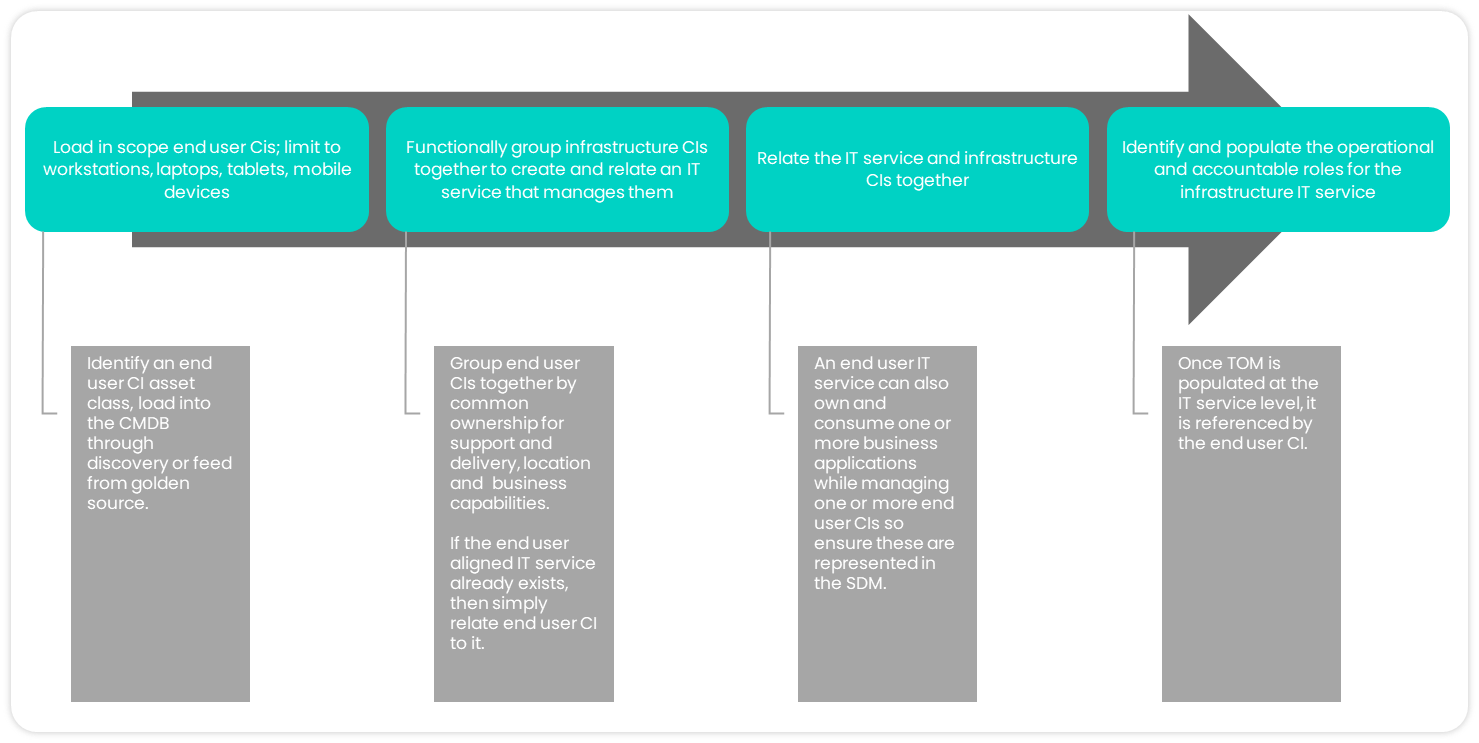
SAF Journey: Stage 4 - Mature
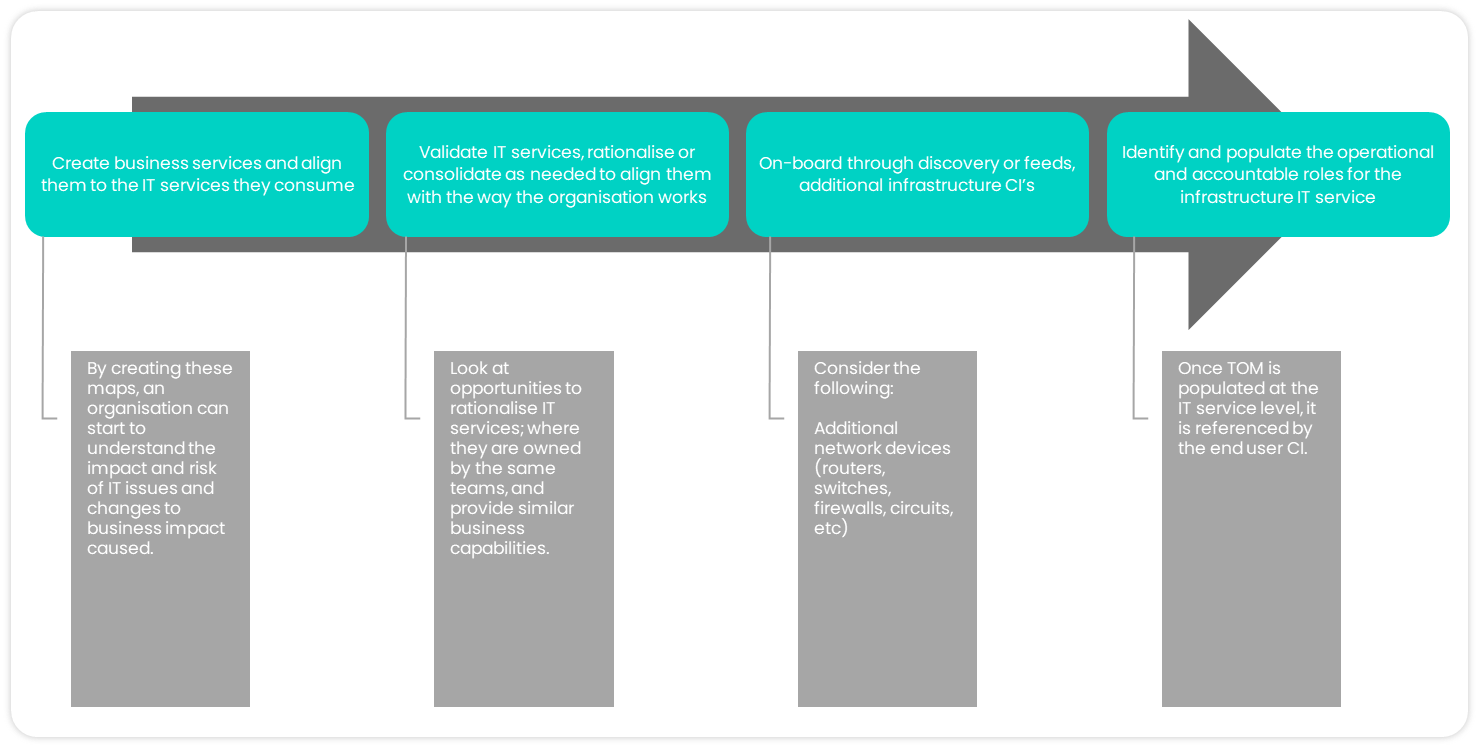
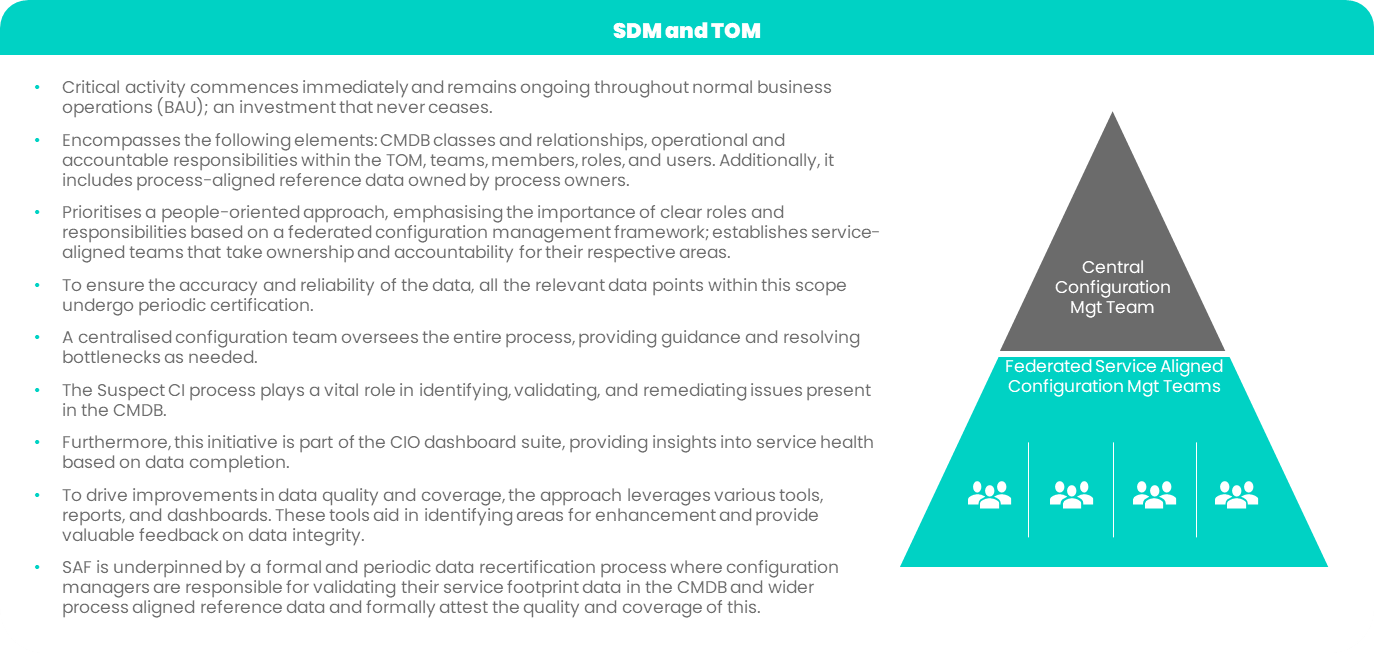
Data Governance
The foundations of any ITSM tool hinge on the quality and coverage of good data. HaloITSM is no different. Data governance is critical and the Halo TOM provides a unique framework to support federated data maintenance.
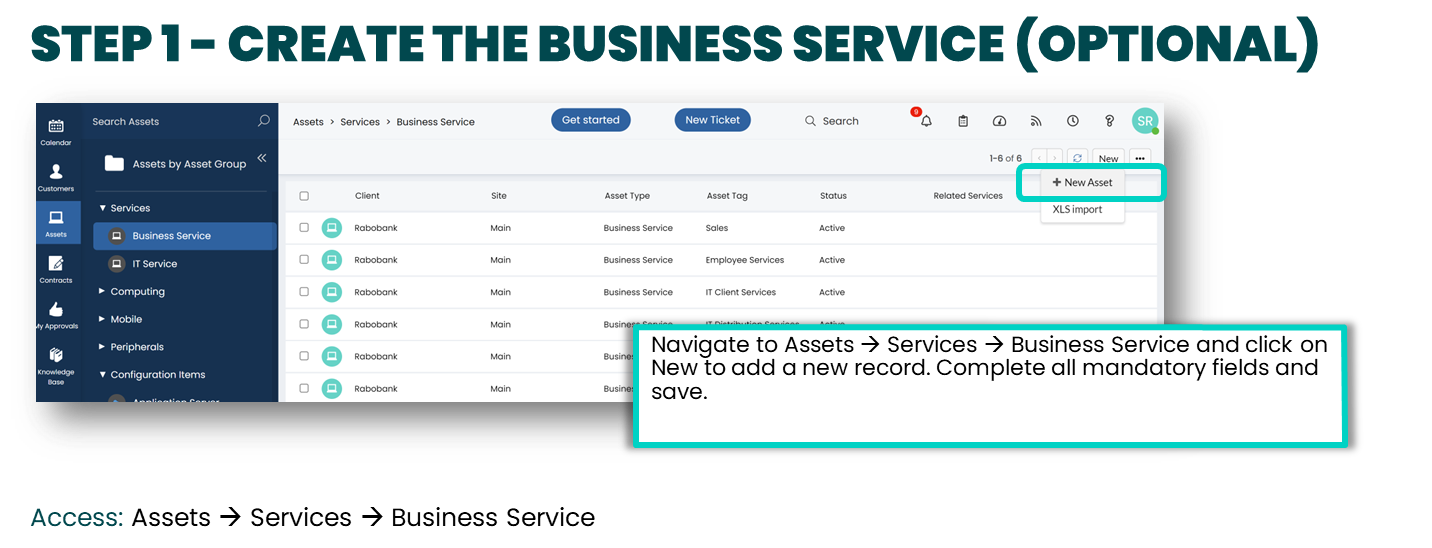
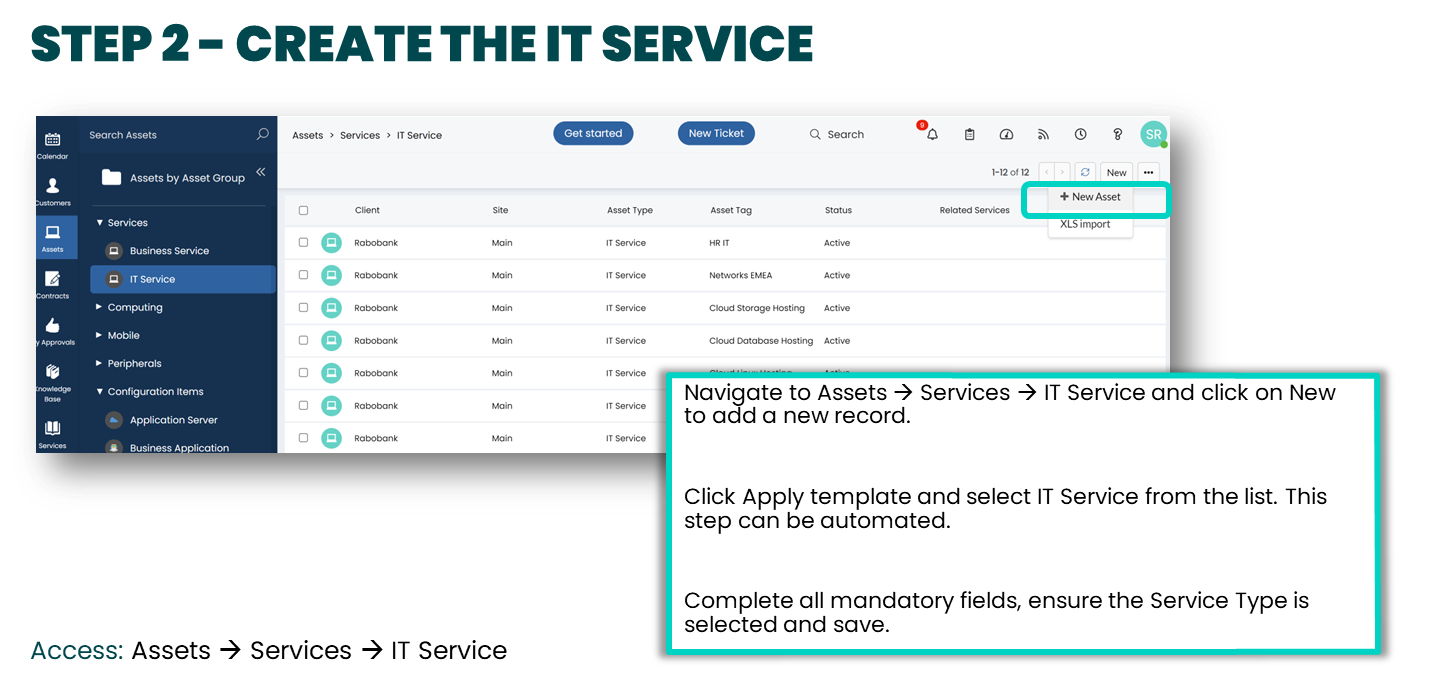
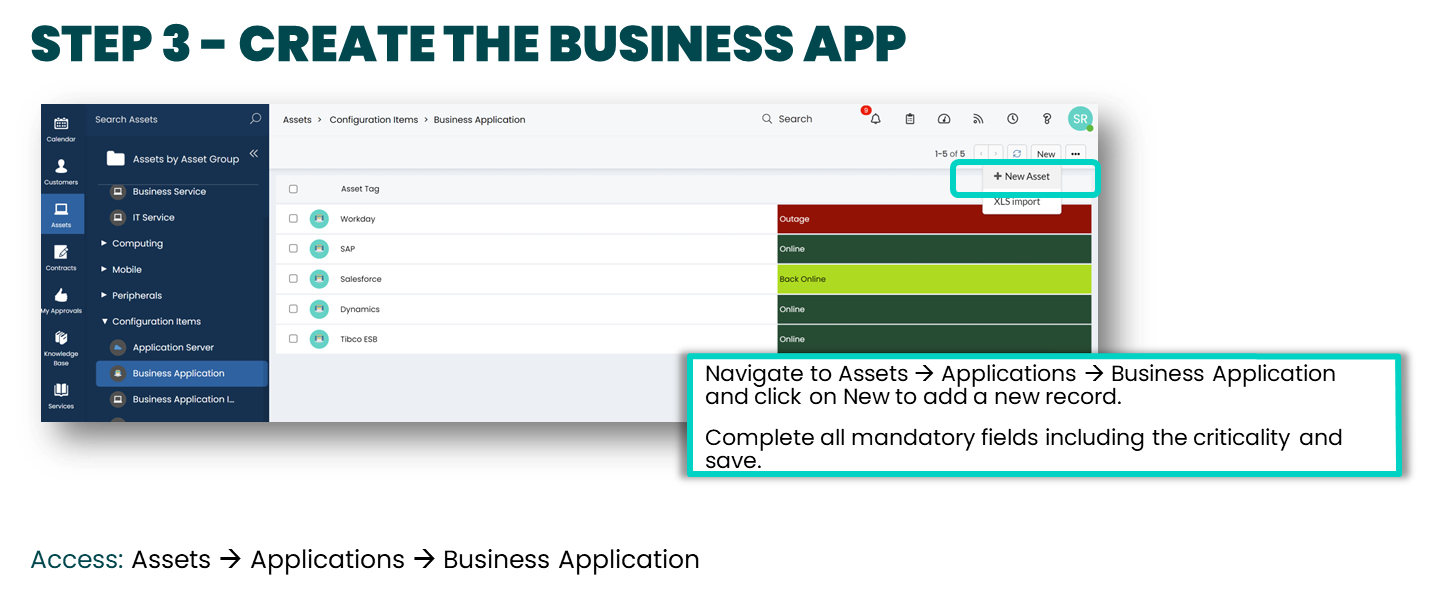
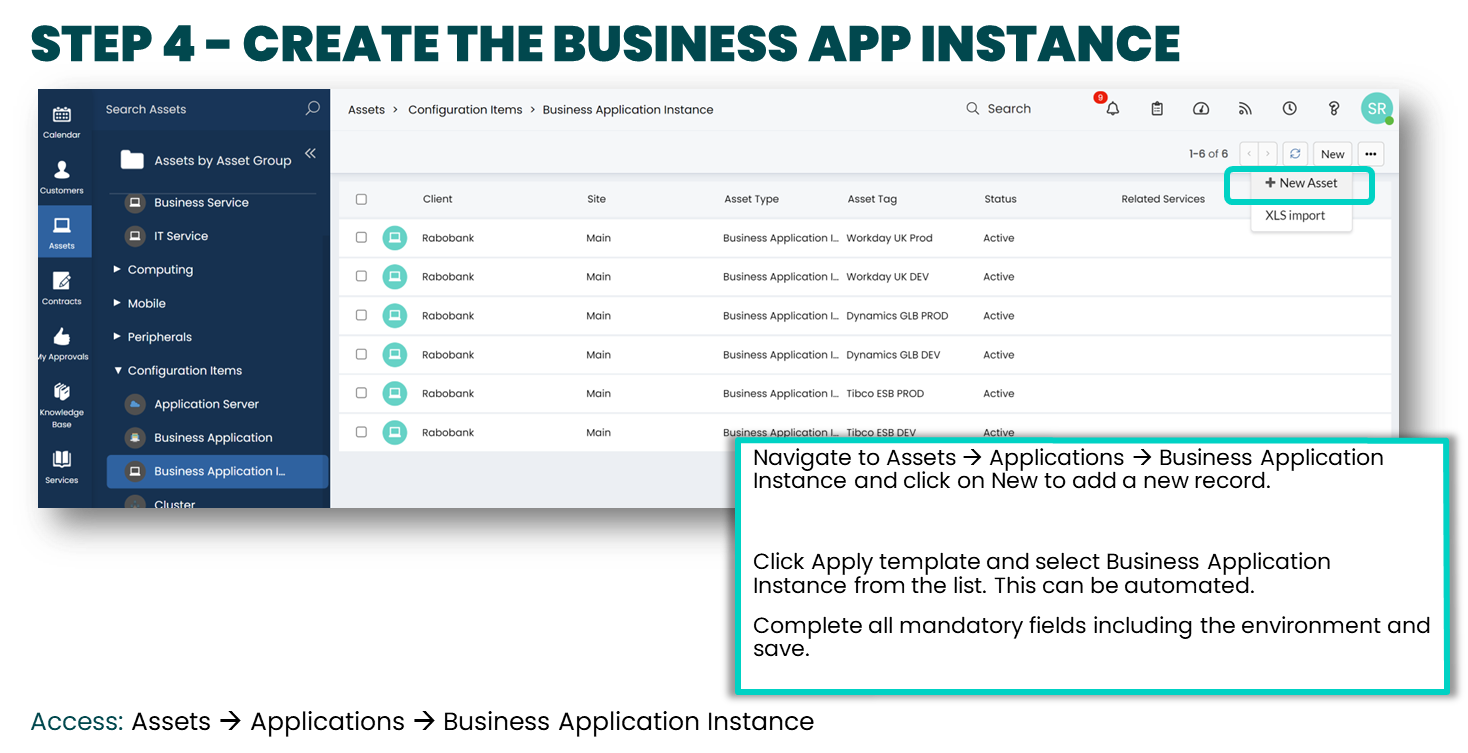
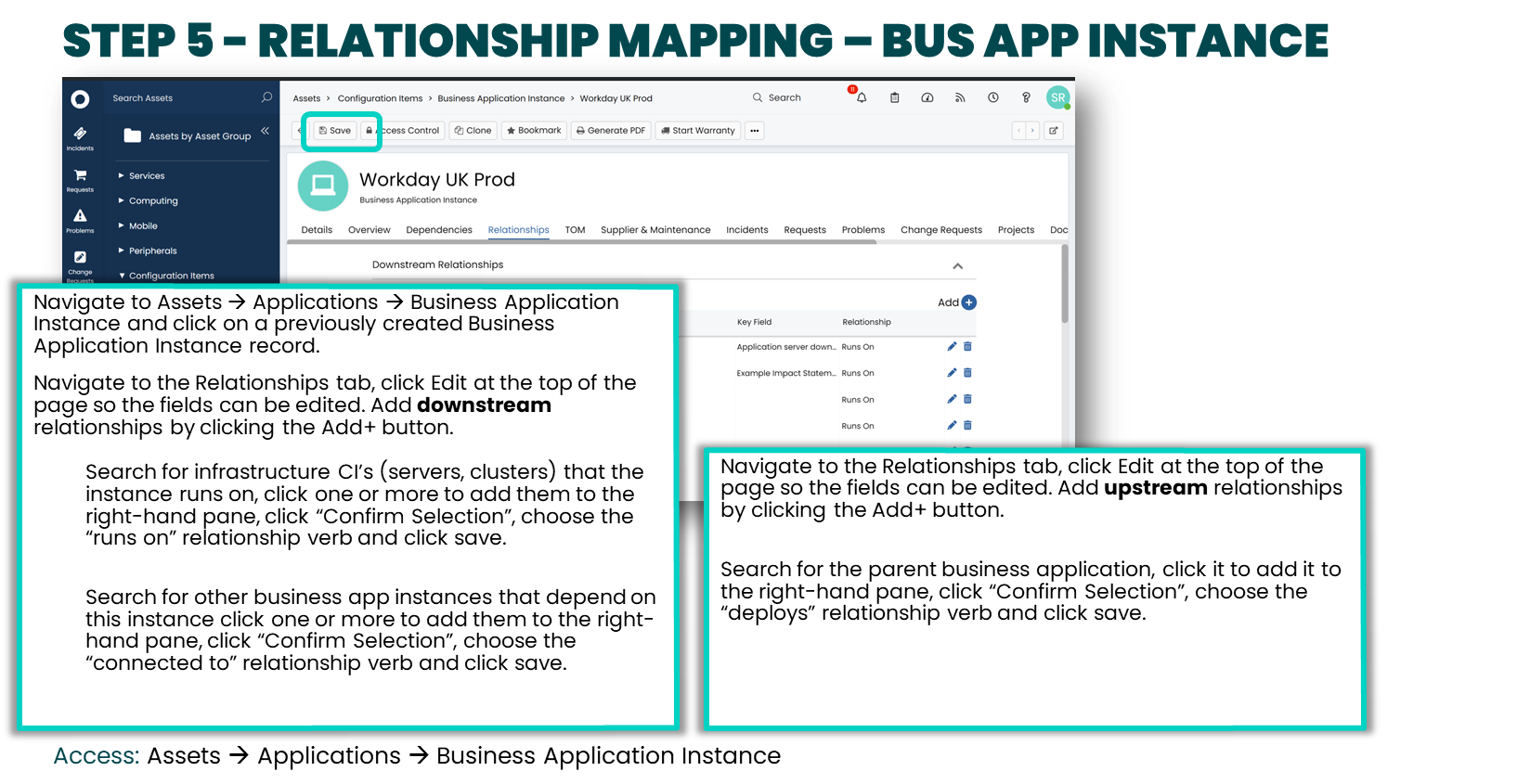
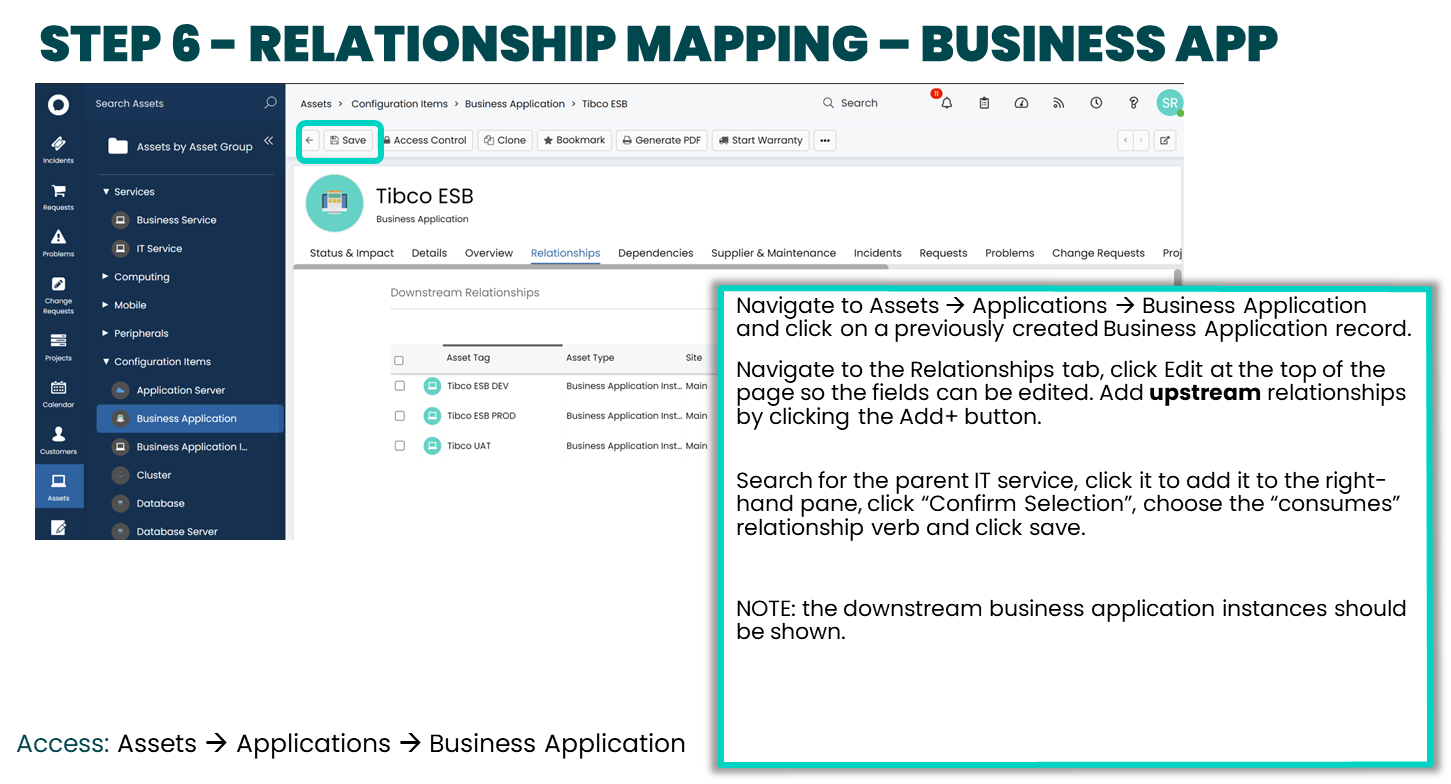
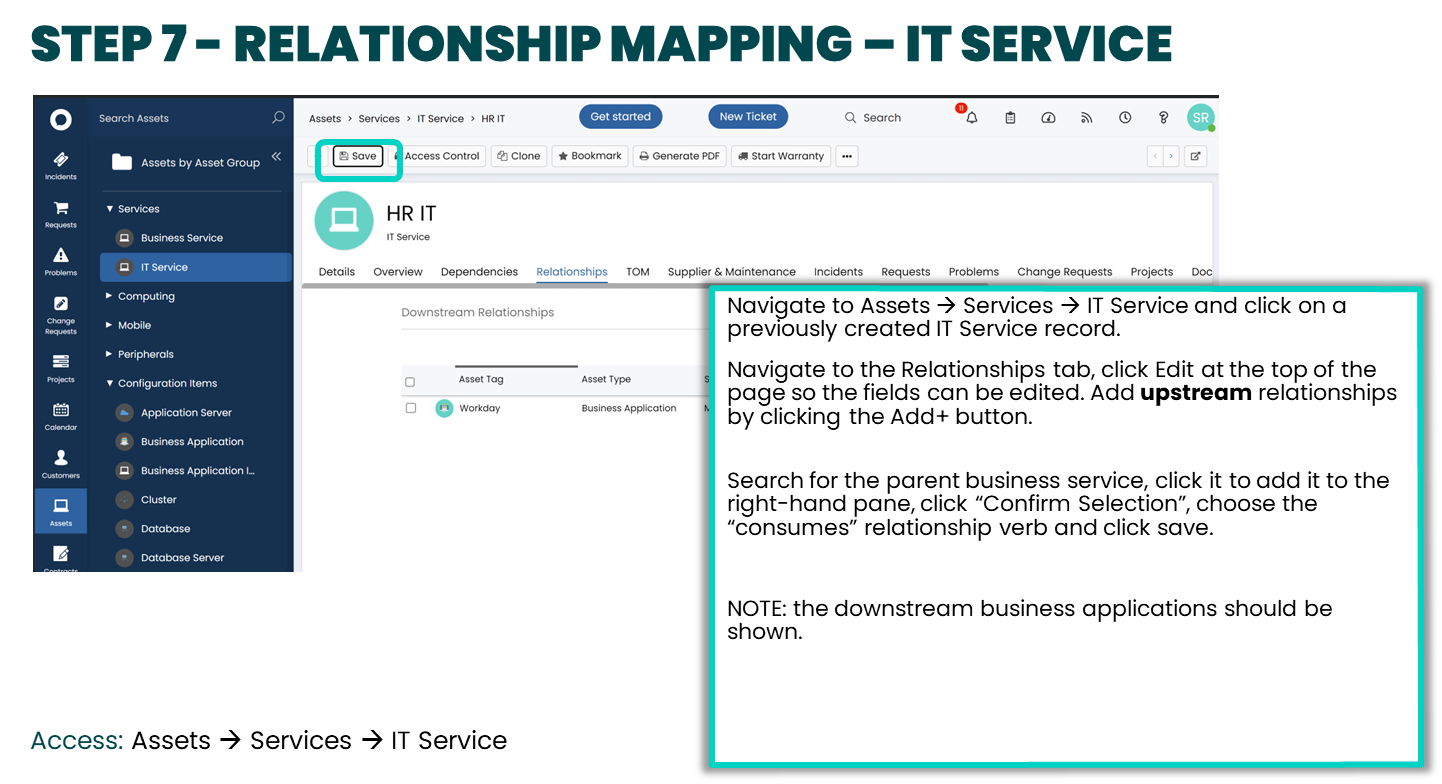
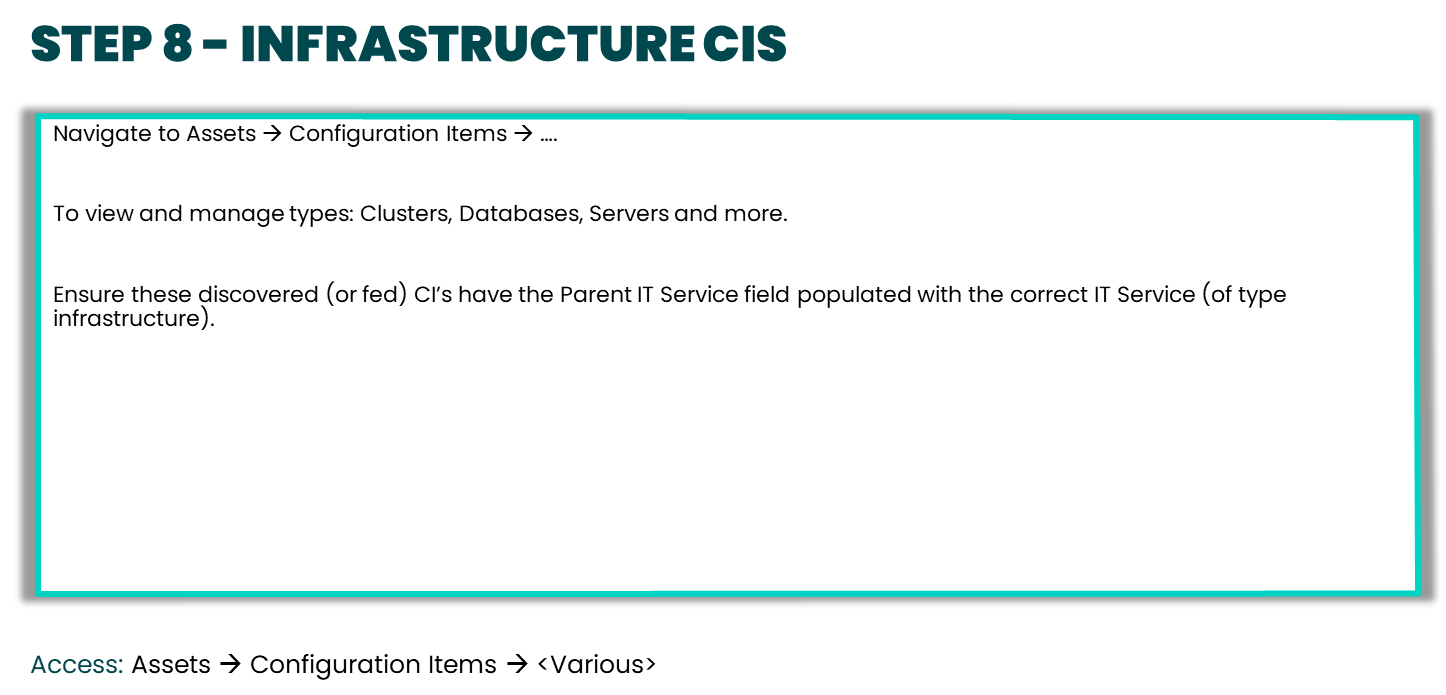
To configure the SAF please see the following steps.
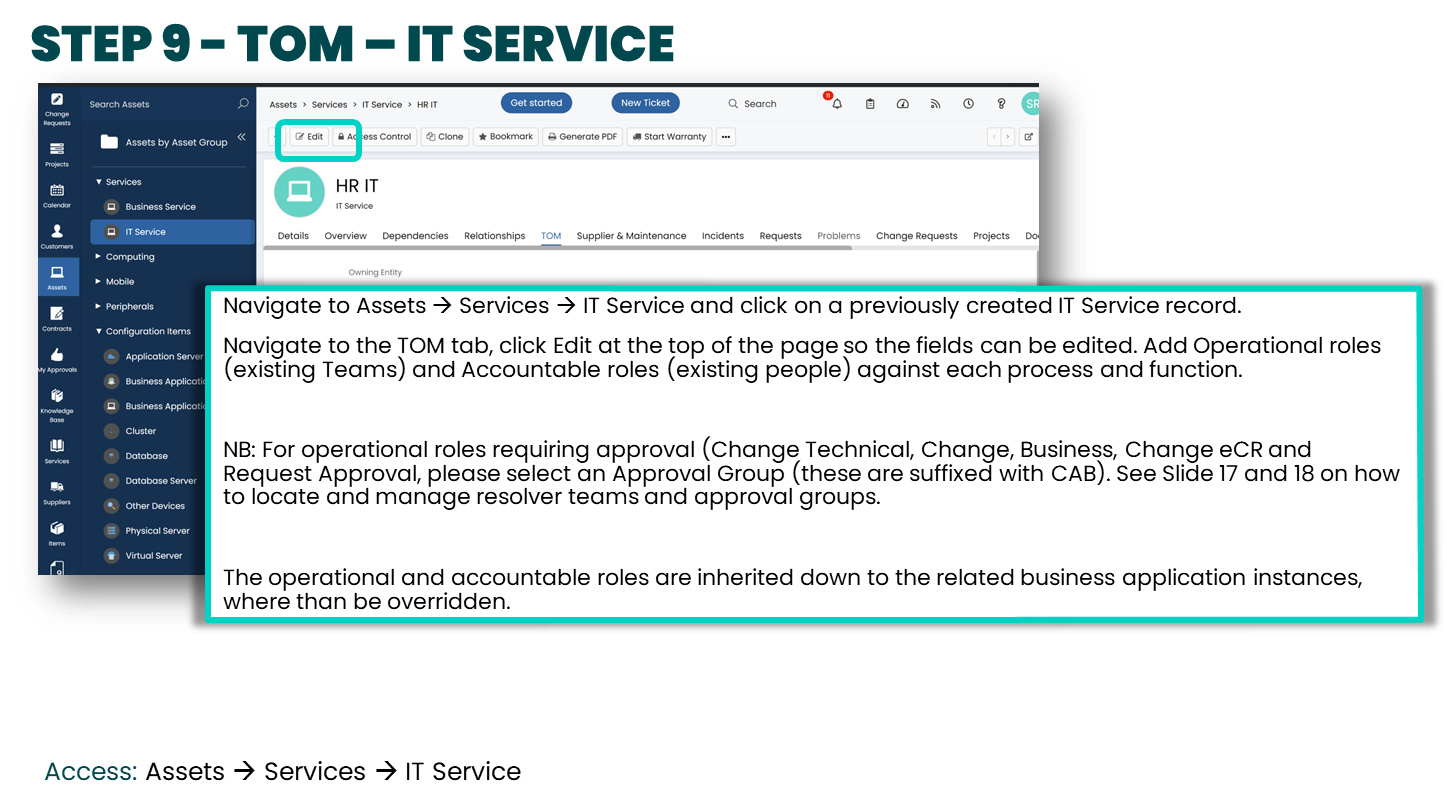
This KB article is intended to provide a guided walkthrough on how to construct a new service with HaloITSM
It includes all key aspects of the service and its wider ecosystem
Assumptions: A new business service, IT service, business applications and business application instances need to be created.
Infrastructure CI’s such as servers, databases and network devices have been discovered and are already in the CMDB.
Once Halo SAF is setup for a given service and its ecosystem of business application and business application instances ITSM process automation is enabled for auto-assignment, determination of approval groups and more.