Stakeholders
In this guide we will cover:
- What are stakeholders?
- Enabling Stakeholders
- Stakeholder Roles
- Adding Stakeholders to an Opportunity
- Reporting on Stakeholders
Related Guides:
The functionality outlined in this guide is available from v2.260+.
What are stakeholders?
Stakeholders are additional contacts set against an Opportunity, allowing you to view multiple Contacts' engagement on a Ticket. When enabled, the Stakeholders functionality allows you to link many Contacts against a single Opportunity, without being limited to one Site or Customer. This lets you build up engagement metrics over an Opportunity's lifetime.
An Opportunity's Contact is added as a Stakeholder automatically when the Opportunity is created or the Contact changes.
Enabling Stakeholders
To enable the Stakeholders functionality, head to Configuration > Sales > General Settings, and enable "Use Opportunity stakeholders". Once enabled, you will see additional settings which allow you to see each Stakeholder's engagement:
Record people on sales mailbox emails - Records which Stakeholders were on each inbound and outbound email to/from a Sales Mailbox.
Record people on system emails - Records which Stakeholders were on each inbound and outbound email to/from system emails.
You will also find a button which allows you to configure Stakeholder Roles.
Note: Stakeholders against a Ticket can be reported on using the FaultUser and ActionUser tables.
Stakeholder Roles
Stakeholders can be assigned Roles which reflect their influence on an Opportunity.
In Configuration > Sales > Stakeholder Roles, click "+ New" to create a new Role.
Against your new Role set the Role name and the sequence. This sequence will determine the order in which the Roles show in a list.
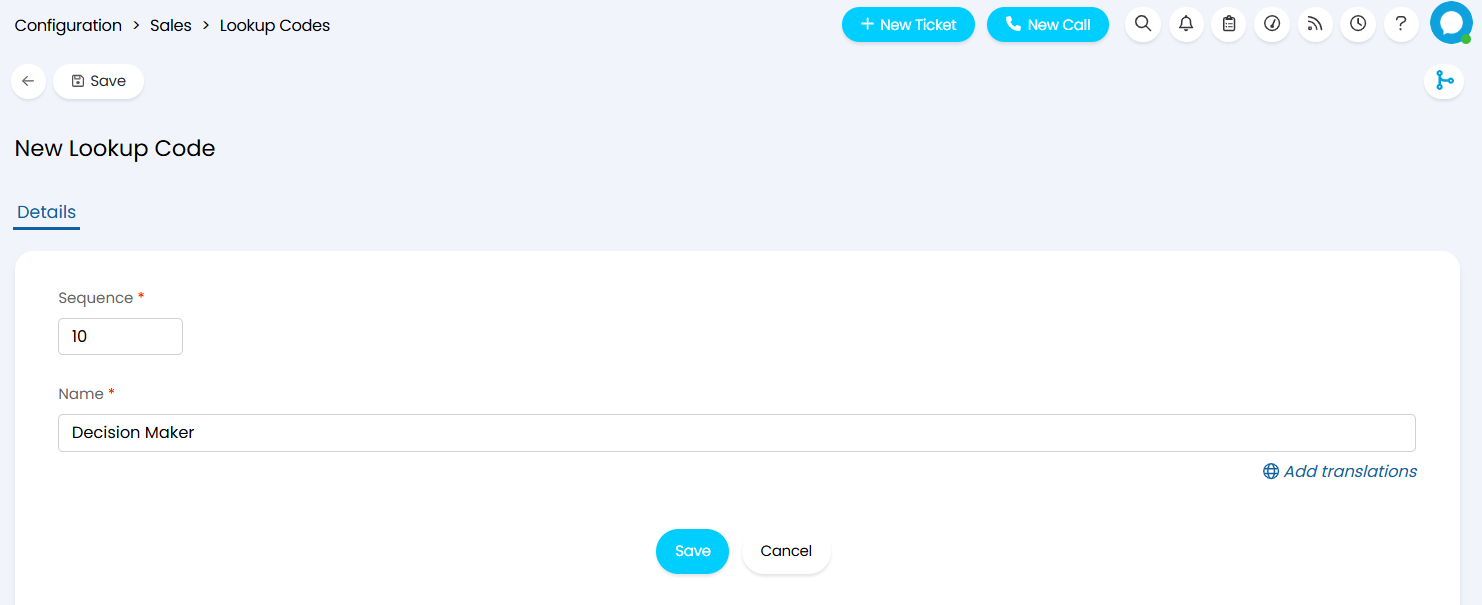
Fig 1. Stakeholder Roles
Once your Roles is saved it can be applied to Stakeholders
Adding Stakeholders to an Opportunity
Stakeholders Tab
On a Sales Ticket you will find the Stakeholders tab. If this tab is not visible, check the Ticket Type's tab layout in Configuration > Sales > Ticket Types, choose the relevant Ticket Type, then click into the Layout Tab. More information on the visibility of Ticket tabs can be found here.
Clicking "+ New" in this tab allows you to add a Stakeholder directly to the Ticket.
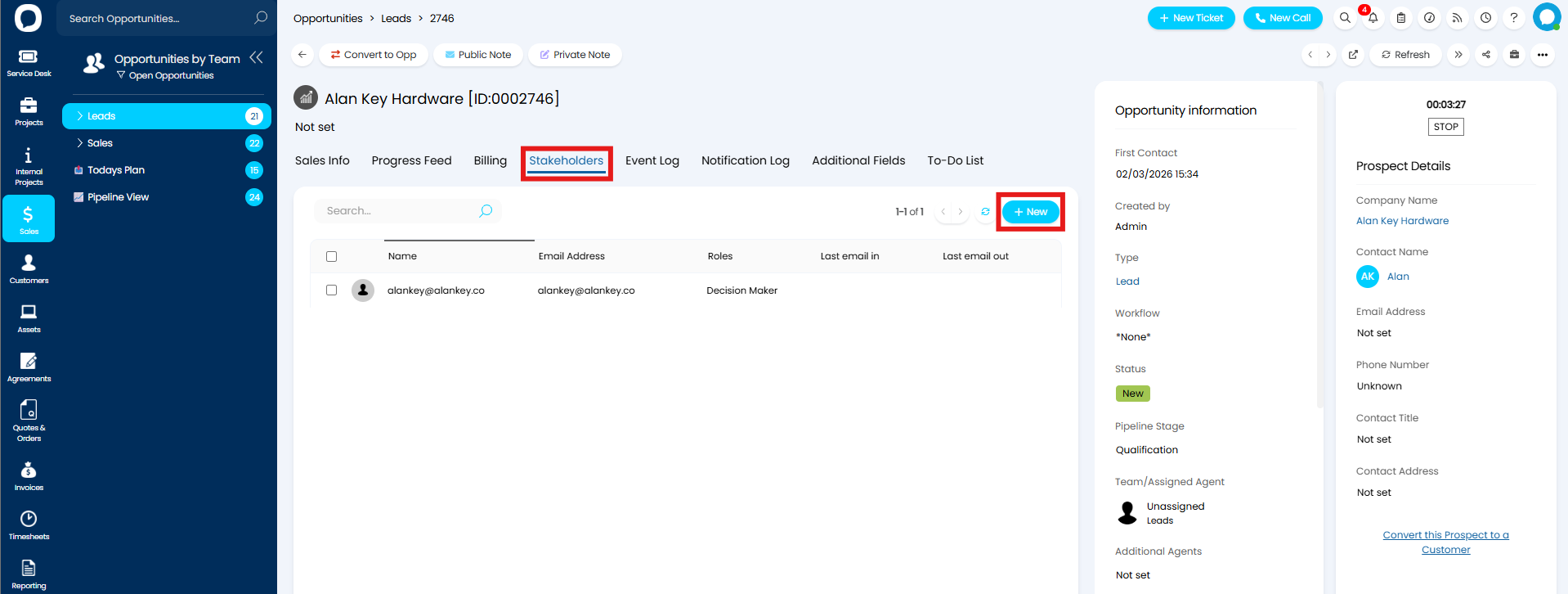
Fig 2. Adding a Stakeholder
When adding a new Stakeholder you can choose from Users/Prospects in the system, or enter an email address. These Stakeholders can then be assigned roles using the "Roles" dropdown.
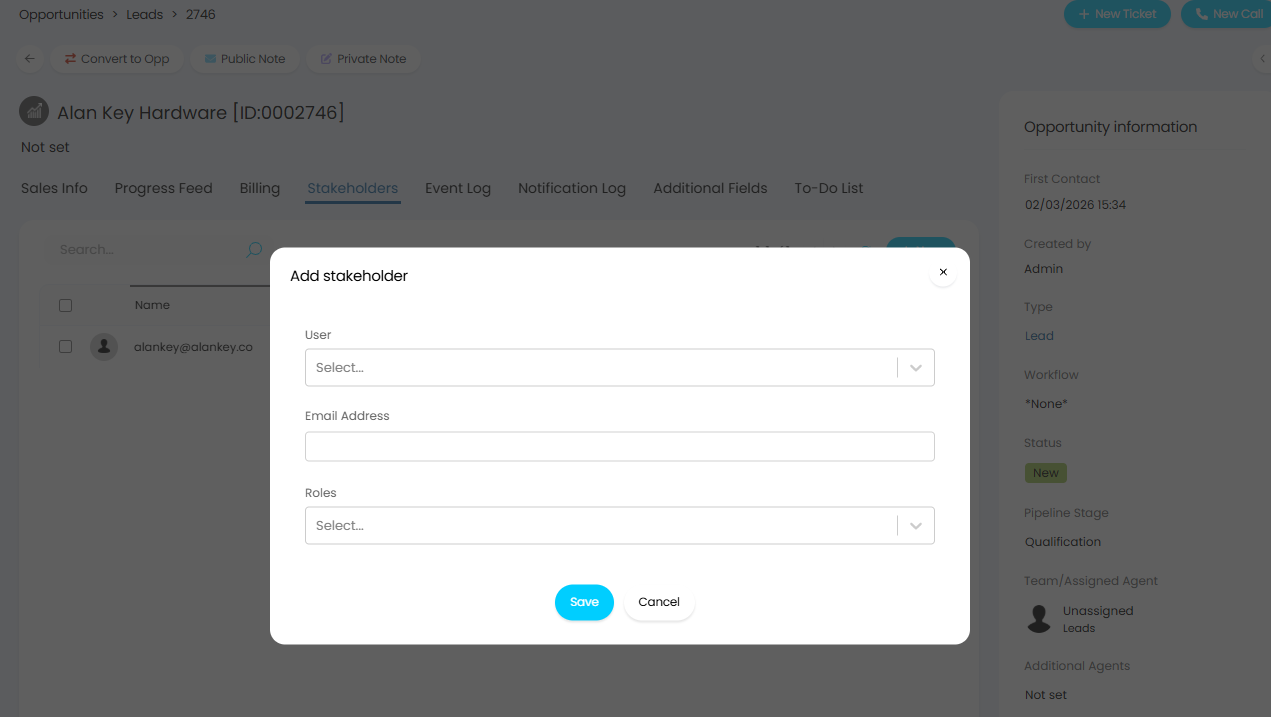
Fig 3. Options when azdding a Stakeholder
Sales Mailbox Rules
Sales Mailbox Rules can also be used to assign Stakeholders to a Ticket. In Configuration > Sales > Sales Email Rules, you can create Email Rules which will "Add the people on the email as stakeholders" when the rule "Log to an open Opportunity". Selecting this against a Sales Email Rule will automatically make the "From" and "CC'd" addresses Stakeholders on the matched Ticket.
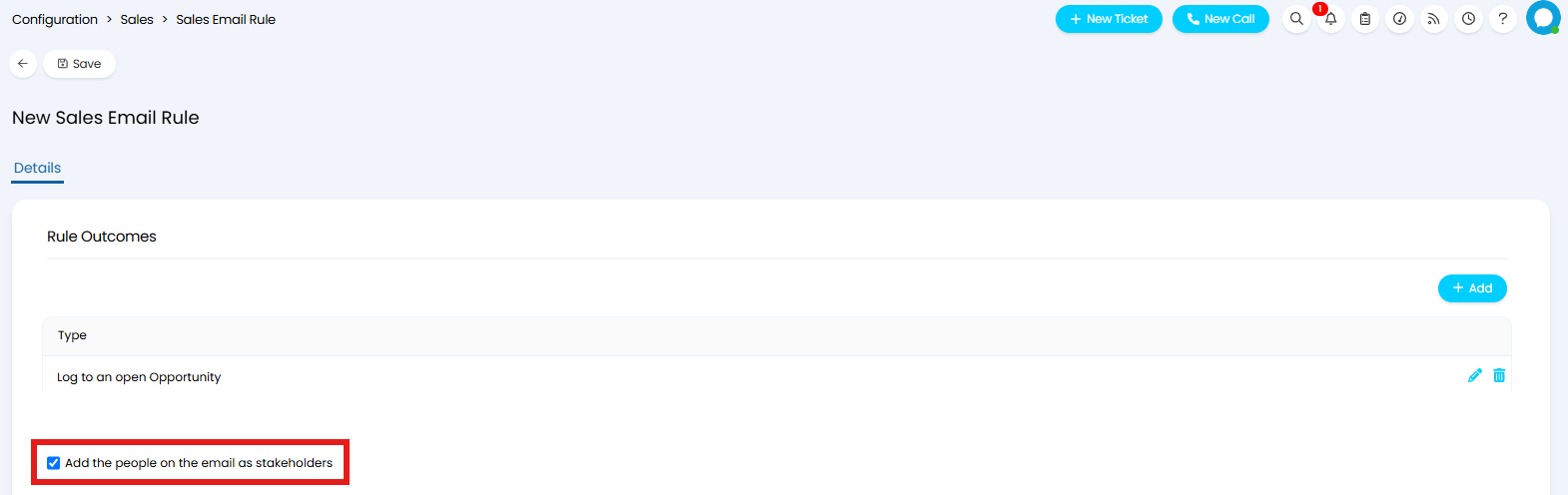
Fig 4. Adding Stakeholders from a Sales Email Rule
These Stakeholders will then show under the Stakeholders tab on a Ticket.
Reporting on Stakeholders
Stakeholders can be viewed and managed under the Stakeholder tab, however this will only show the Stakeholders that belong to the Ticket being viewed. Instead you may choose to report on this information using the FaultUser and ActionUser tables.
The FaultUser table shows information about each Stakeholder on a Ticket. Below we can see that Ticket 3230 has two Stakeholders.
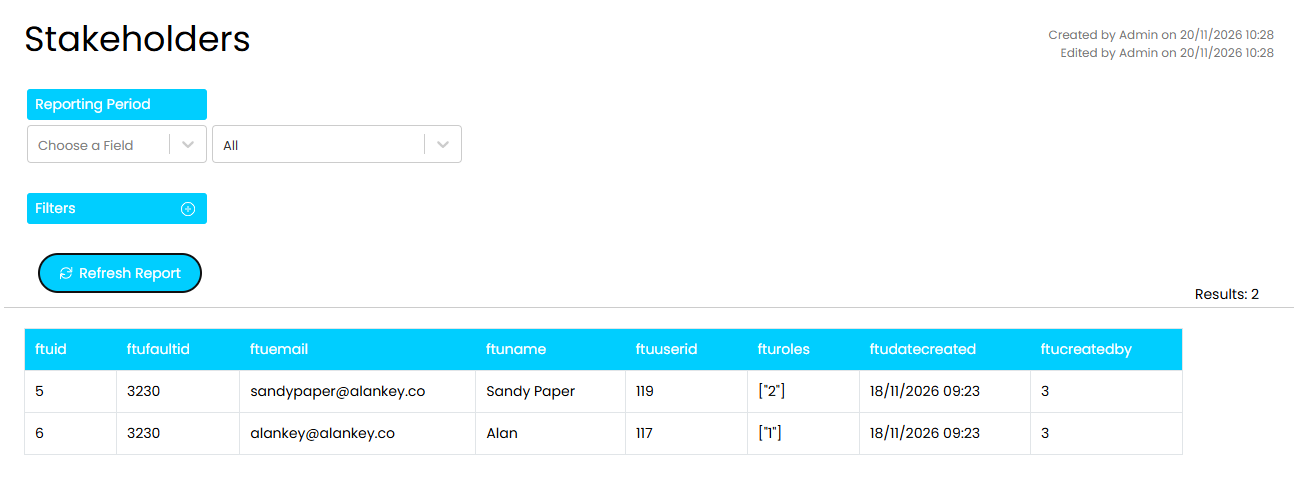
Fig 5. FaultUser report
The ActionUser table can be used to show the actions attributed to a Stakeholder on a Ticket. In the below example, the report shows that an email has been sent to "Sandypaper@alankey.co" from Ticket number 3230 on the 20/11/2026.
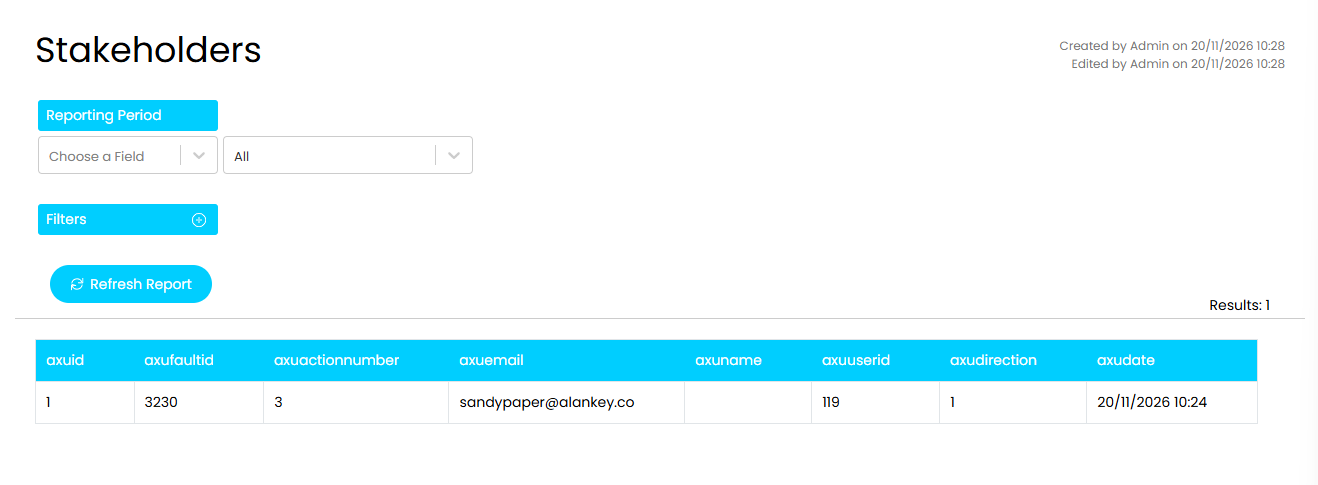
Fig 6. ActionUser report
Together these tables allow you to easily report on Stakeholder's details, and observe their involvement on a Ticket. These reports can be added to Dashboards to show the Sales Team which Stakeholders would typically be involved at different stages of the sale, and therefore which contacts they should be communicating with.