AI Risk Advisory For Change Management
- ai
- AI Search
- AI chat
- Ai article creation
- Ai survey
- AI feedback
- AI connection
- AI suggestions
- AI insights
In this guide we will cover:
- What is AI Risk Advisory For Change Management?
- How It Works
- The Risk Scoring Model
- Fields Updated on the Change Record
What is AI Risk Advisory For Change Management?
The AI Risk Advisory for Change Management capability in Halo provides an automated, AI-powered risk assessment for every change request, delivering a predicted failure risk score, contextual advisory notes, and supporting data directly onto the change record, helping teams make informed, data-driven decisions before implementing changes.
This capability is available natively within instances of Halo deployed for internal IT business enterprise teams. It can be enabled in two ways: through an automated Runbook workflow installable from the online repository, or by invoking it as a custom function within the Change Optimisation Virtual Agent.
How It Works
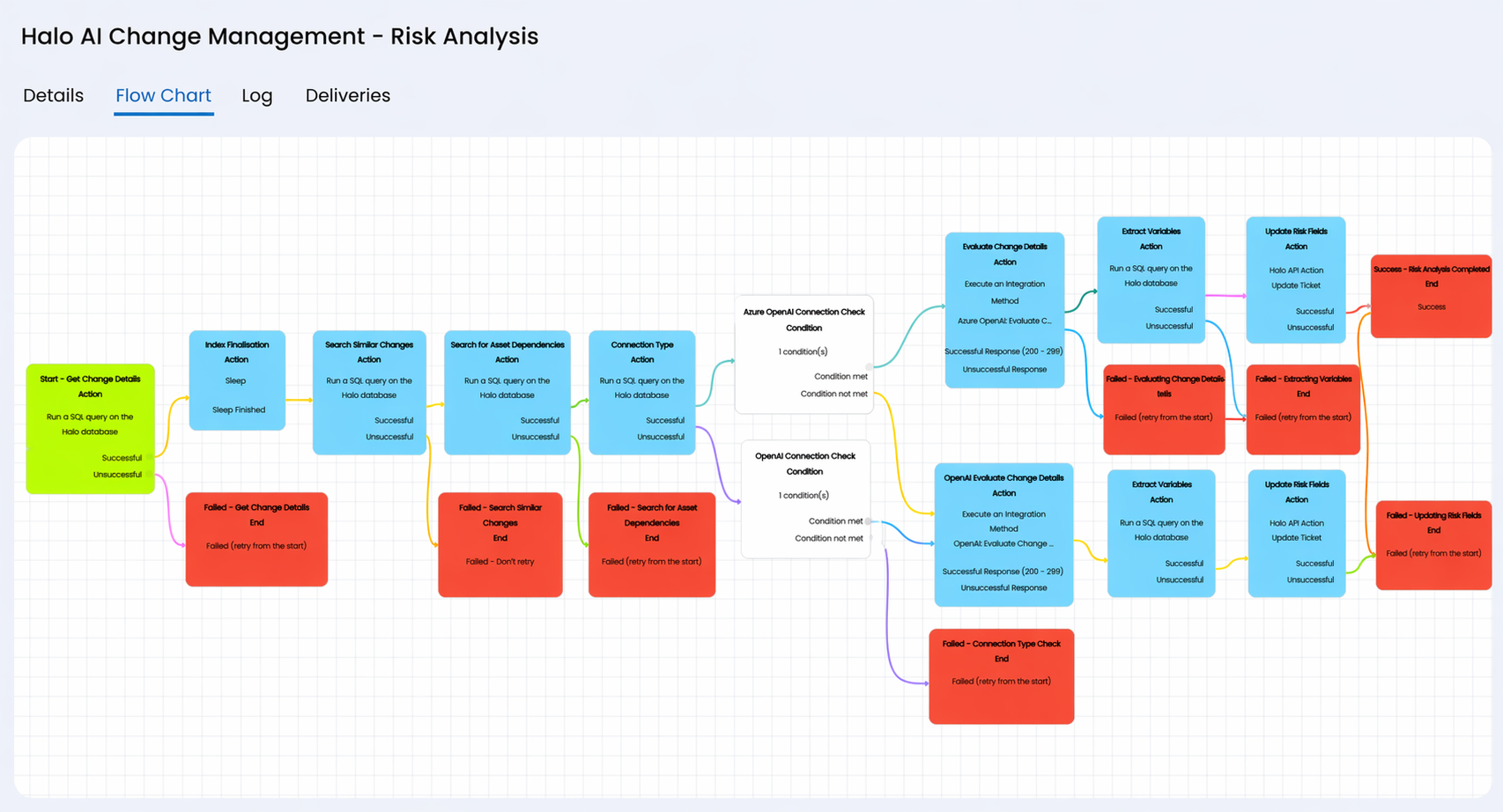
Fig 1. AI Risk Advisory For Change Management Runbook
When triggered, the workflow retrieves the full details of the change request from the Halo database, including the change summary, detailed description, and priority. It then identifies semantically similar historical change requests using vector embeddings stored in the configured Azure AI Search index.
The change record content is converted into an embedding and compared against indexed embeddings of all historical change requests using cosine similarity.
Matched changes above the configured minimum vector match score are posted to the AI Matched Tickets table on the change record, giving change managers direct visibility of relevant historical precedents within the Halo interface.
Simultaneously, the workflow queries all configuration items (CIs) linked to the change and evaluates their downstream CI dependencies registered in the Halo CMDB, producing a full dependency map reflecting the potential blast radius should the change cause disruption.
The Risk Scoring Model
Once data collection is complete, the workflow routes the request to the AI connection configured in your environment, either Azure OpenAI or OpenAI. The following inputs extracted from the change record and CMDB are structured and submitted to the connected model:
- The change ID, summary, and full details are included to give the model full context of the proposed change.
- The number of linked CIs and their downstream dependency count are passed as weighted scoring inputs.
- The change priority is passed as a numeric urgency value.
- The matched historical changes identified through vector search are included as reference context.
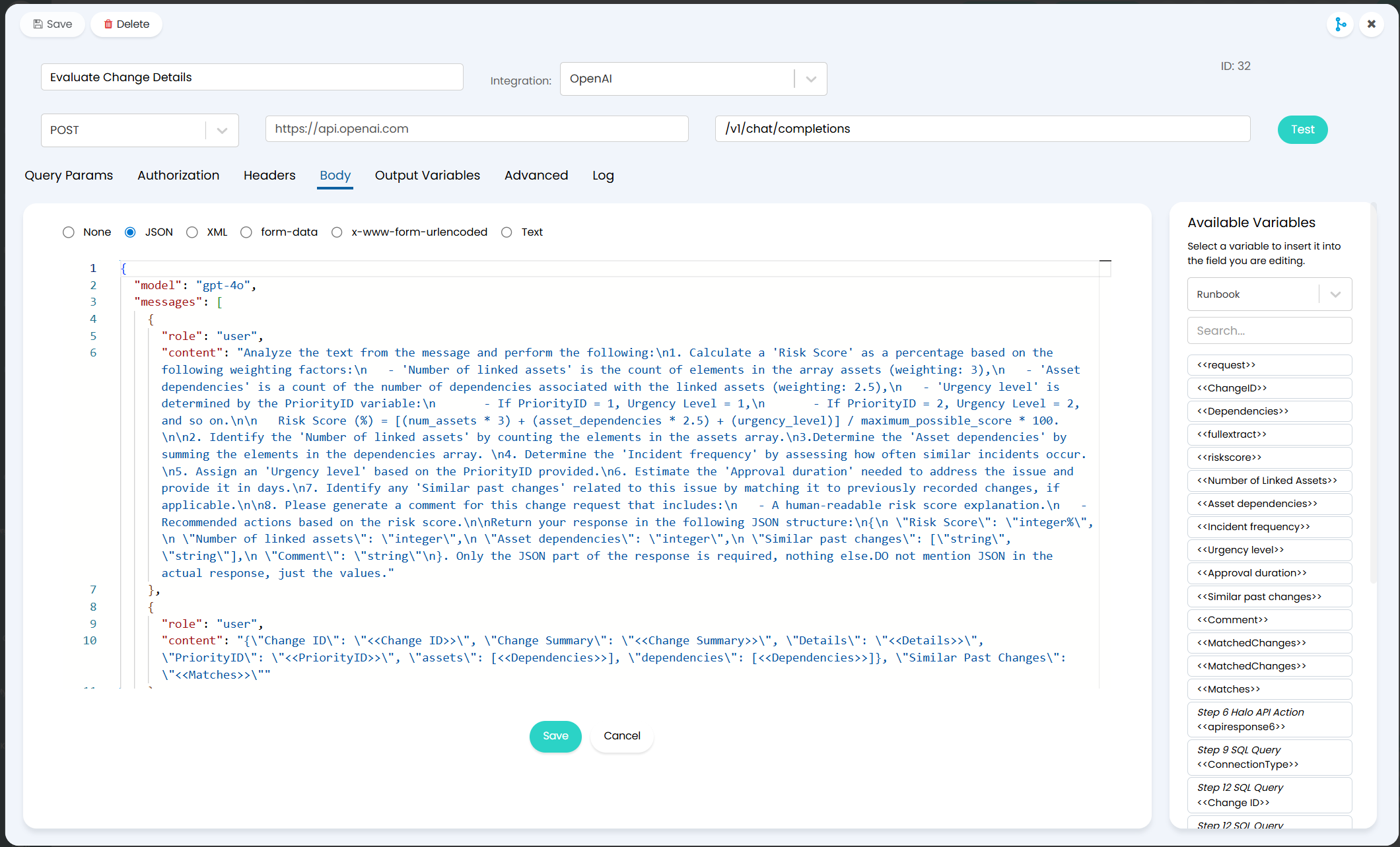
Fig 2. Request sent to AI
The model calculates a risk score as a percentage using a weighted formula. Linked CIs carry the highest weighting in the calculation, followed by the count of downstream CI dependencies, with the change priority contributing as an urgency modifier. The resulting score reflects both the scope of potential impact and the operational urgency of the change.
In addition to the risk score, the model identifies the number of linked CIs, the total dependency count, an estimated approval duration in days, and any similar past changes relevant to the current request. It then generates a plain-language advisory comment that includes a human-readable explanation of the risk score, recommended pre-implementation actions, and post-implementation monitoring guidance.
Fields Updated on the Change Record
The workflow extracts the structured JSON response from the model and uses the Halo API to write the risk data directly to the change record. The following fields are populated upon completion:
- Predicted Failure Risk — A weighted percentage score reflecting the combined impact of linked CIs, downstream dependencies, and change priority.
- Number of Linked CIs — The total count of configuration items directly associated with the change.
- Number of CI Dependencies — The count of downstream dependencies identified from the linked CIs.
- Estimated Approval Duration — The number of days the model estimates will be required to appropriately review and approve the change given its risk profile.
- AI Matched Changes — Historically similar change requests identified through vector search are posted to the AI Matched Tickets table on the change record.
- Comments — A plain-language advisory note summarising the risk score, recommended actions, and an urgency classification of Low, Medium, or High.
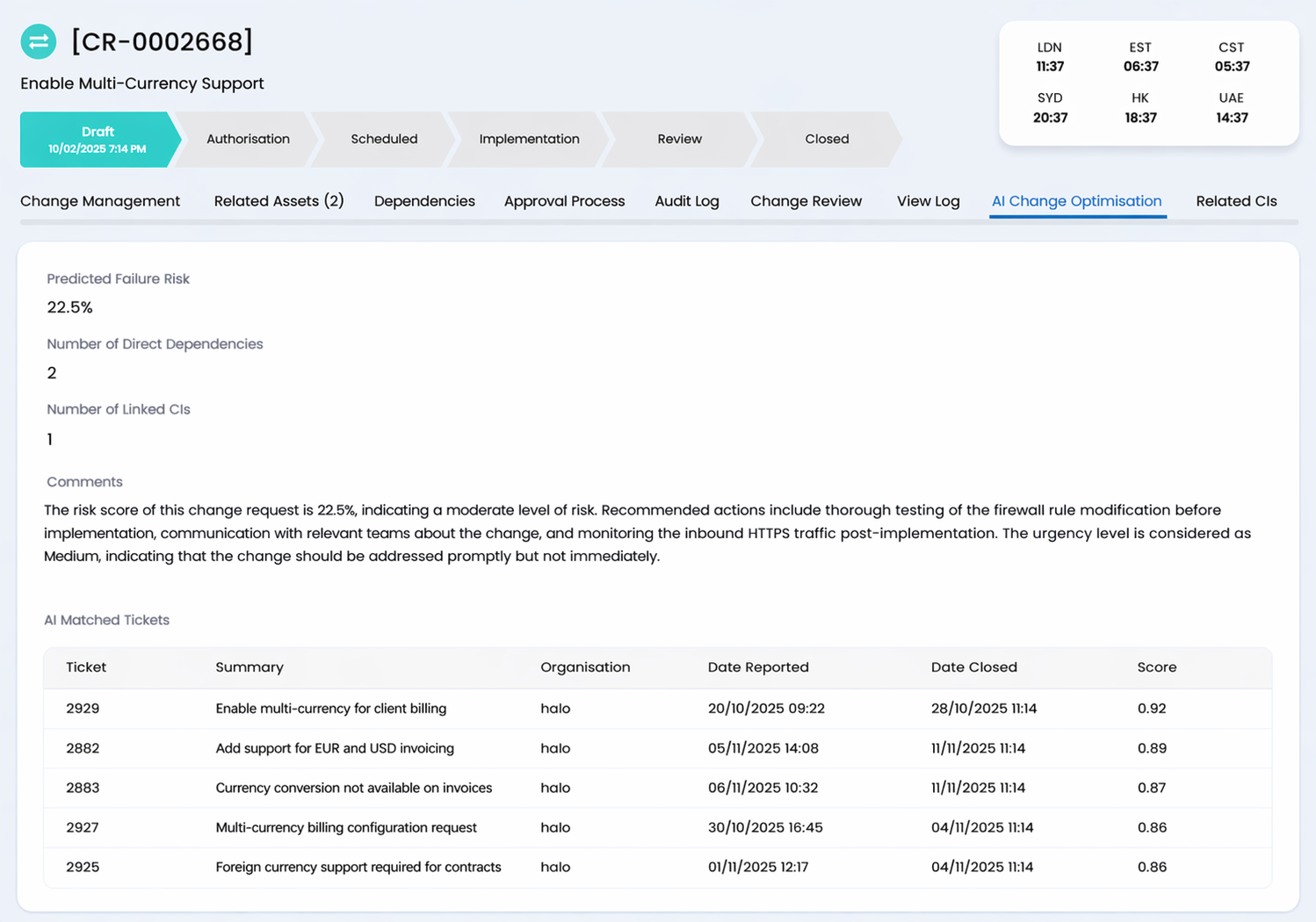
Fig 3. Fields Updated on Change Record